

The Complete Guide to Semax for Laboratory Research

RL-006
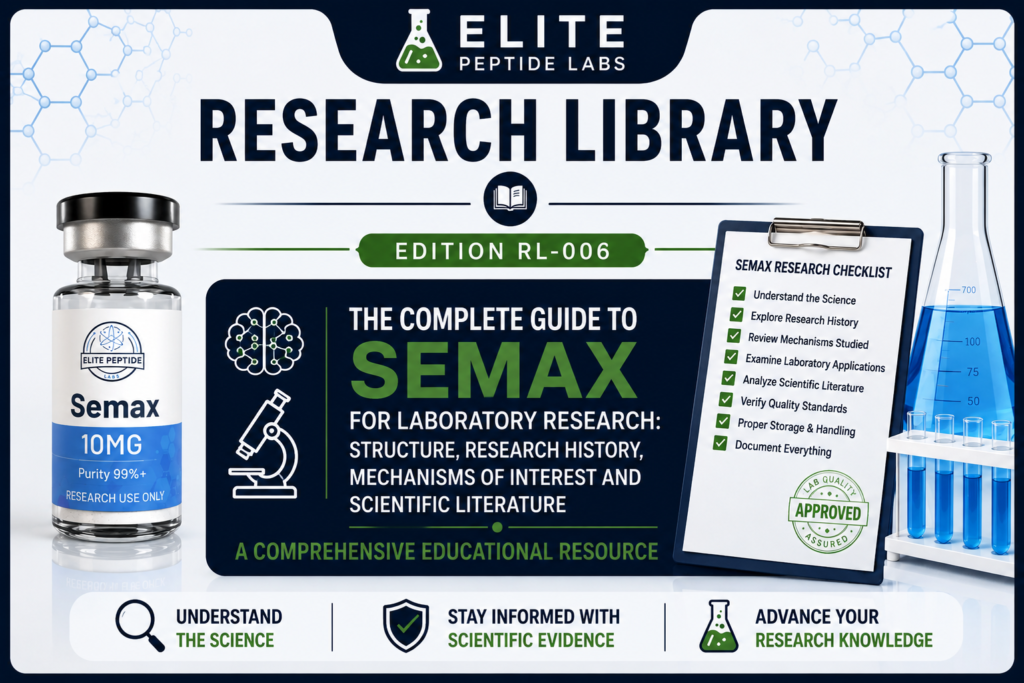
Semax Structure, Research History, Mechanisms of Interest & Scientific Literature
Research Snapshot
| Reader Info | Semax Structure, Research History, Mechanisms of Interest & Scientific Literature |
|---|---|
| 📖 Reading Time | ⏱ 24–30 Minutes |
| 🎯 Difficulty | 🟢 Beginner Friendly |
| 🧪 Category | Research Peptide Guide |
| 📅 Last Updated | August 2026 Version 1.0 |
| 🏢 Published By | 📚 Elite Peptide Labs Research Library |
Introduction
Imagine discovering a peptide that has attracted the attention of neuroscientists for more than three decades.
A compound originally developed through academic research.
One that continues to appear in published literature exploring learning, memory, attention, neuroplasticity, and the brain’s response to stress.
That peptide is Semax.
Unlike many peptides that first gained popularity through bodybuilding communities or online discussion forums, Semax has a unique scientific history. It originated from neuroscience research and has been the subject of numerous laboratory investigations examining how certain peptide fragments may interact with biological pathways involved in cognitive function.
Because of this background, Semax has become one of the most frequently discussed research peptides in neuroscience literature.
Yet despite its growing popularity, many researchers still ask similar questions.
What exactly is Semax?
How was it developed?
Why has it attracted so much scientific interest?
What mechanisms are researchers currently investigating?
And what questions remain unanswered?
Understanding Semax requires more than simply reading product descriptions or social media discussions.
It requires understanding the science behind the molecule itself.
Throughout this guide, we’ll examine the origins of Semax, its molecular structure, why researchers study it, the biological pathways currently being investigated, and what the scientific literature tells us today.
As with every article in the Elite Peptide Labs Research Library, our goal is not to make claims or predictions.
Our goal is to explain the science.
Because informed researchers ask better questions.
And better questions lead to better science.
⚡ Quick Answer
Semax is a synthetic peptide originally developed through neuroscience research. It is a modified fragment of adrenocorticotropic hormone (ACTH) that has been studied in laboratory settings for its potential interactions with pathways related to learning, memory, neuroplasticity, stress responses, and neurotrophic factors. Research remains ongoing, and scientists continue to investigate its mechanisms of action and possible applications within experimental models.
🧪 Professor Peptide Says
“The most interesting peptides aren’t necessarily the ones with the biggest headlines—they’re the ones that continue generating thoughtful scientific questions decades after they were first discovered.”

What Is Semax?
Understanding a Synthetic ACTH-Derived Research Peptide
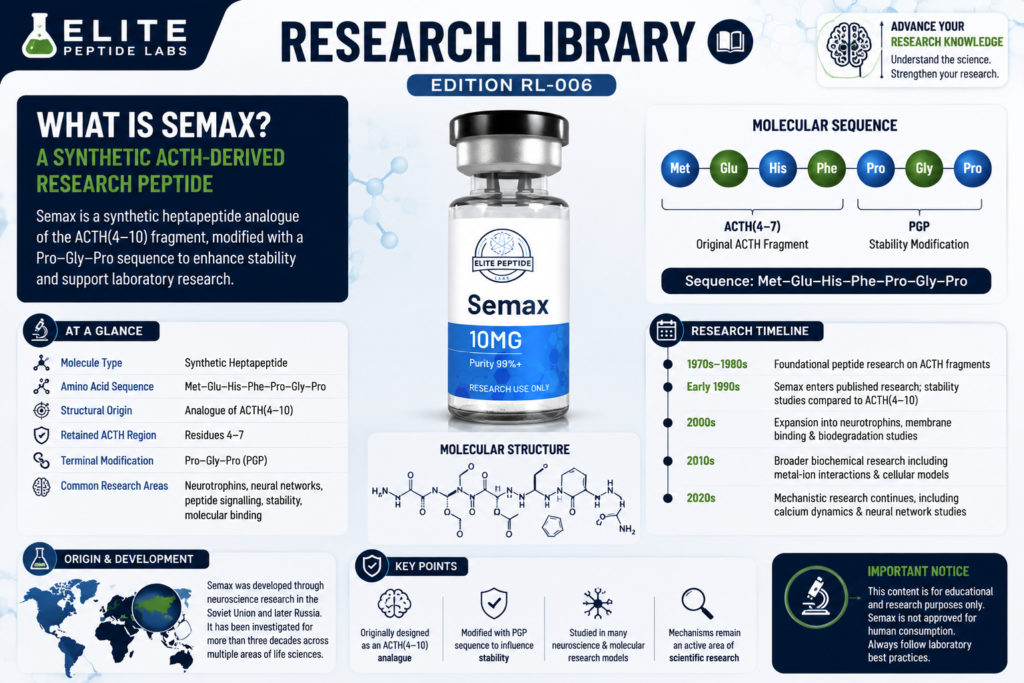
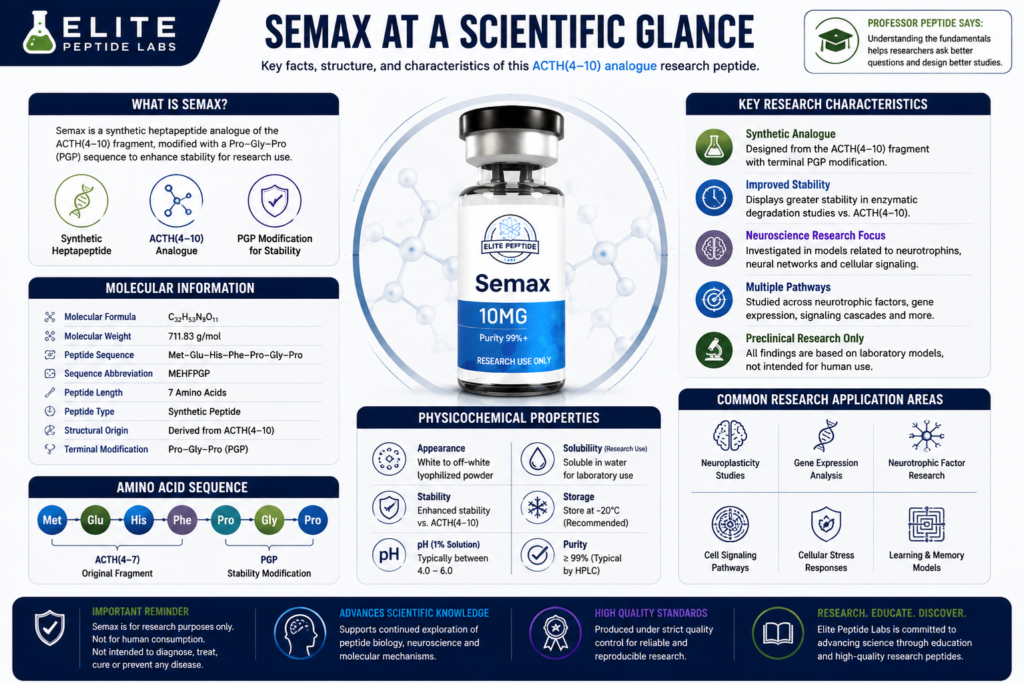
Semax is a synthetic heptapeptide, meaning that its molecular structure is composed of seven amino-acid residues arranged in a defined sequence:
Met–Glu–His–Phe–Pro–Gly–Pro
In scientific literature, Semax is commonly described as an analogue of the N-terminal ACTH(4–10) fragment of adrenocorticotropic hormone.
That description can sound complicated at first.
However, it becomes easier to understand when the molecule is examined step by step.
Adrenocorticotropic hormone, commonly abbreviated as ACTH, is a naturally occurring peptide hormone composed of a much longer chain of amino acids. Scientists studying this molecule identified smaller regions—or fragments—within the chain that could be investigated independently from the complete hormone.
Semax was designed using part of one such region.
Its first four amino acids correspond to residues 4–7 of ACTH:
Met–Glu–His–Phe
Researchers then incorporated the short peptide sequence:
Pro–Gly–Pro
at the molecule’s C-terminal end.
The resulting seven-amino-acid sequence became known as Semax. Scientific publications therefore describe it as an ACTH(4–10) analogue, although its final three residues differ from the corresponding residues in the natural ACTH fragment.
More Than a Shortened Hormone
It is important not to interpret Semax as simply a miniature version of ACTH.
Semax is a purposefully modified synthetic peptide with its own molecular characteristics.
Although its structure was developed from an ACTH-derived sequence, it should not be assumed to reproduce every biological function of the complete hormone. Removing most of the original ACTH molecule and modifying its terminal amino acids substantially changes the compound being studied.
This distinction is important because peptide activity is influenced by more than the presence of individual amino acids.
Researchers also evaluate:
- The exact amino-acid sequence
- The order in which those amino acids appear
- Molecular conformation
- Enzymatic stability
- Binding interactions
- Breakdown products
- The experimental model being used
Even relatively small sequence modifications can affect how a peptide behaves in a biological or analytical system.
Semax is therefore studied as a distinct synthetic research compound—not merely as an interchangeable substitute for full-length ACTH.
Why Was the Pro–Gly–Pro Sequence Added?
Investigating Molecular Stability
Naturally occurring regulatory peptides are often broken down rapidly by enzymes.
This degradation is part of normal biology, but it presents a challenge for researchers attempting to study a peptide’s behaviour over a meaningful period.
The Pro–Gly–Pro, or PGP, sequence incorporated into Semax was intended to modify the properties of the original ACTH-derived fragment.
An early comparative study examined the enzymatic degradation of ACTH(4–10) and Semax in rat blood and serum. The researchers reported that Semax demonstrated greater stability than the original ACTH fragment against some of the enzymes involved in peptide breakdown.
This does not mean that Semax is resistant to all degradation.
Like other peptides, it can still be metabolized into smaller fragments.
Research involving rat-brain plasma membranes has identified sequential degradation products, including a five-amino-acid fragment and the terminal PGP tripeptide. That work also reported specific, reversible binding under the experimental conditions used.
These observations illustrate an important principle in peptide science:
A synthetic modification may influence not only the intact peptide, but also how it is processed and which smaller fragments appear during degradation.
For researchers, both the original molecule and its breakdown products may therefore be relevant areas of investigation.
🧪 Professor Peptide Says
“In peptide chemistry, changing only a few amino acids can create an entirely different research molecule. Sequence, position, and stability all matter.”
Semax at a Glance
| Scientific characteristic | Description |
|---|---|
| Molecule type | Synthetic heptapeptide |
| Amino-acid sequence | Met–Glu–His–Phe–Pro–Gly–Pro |
| Common abbreviation | Semax |
| Structural origin | Analogue derived from the ACTH(4–10) region |
| Retained ACTH sequence | ACTH residues 4–7 |
| Terminal modification | Pro–Gly–Pro tripeptide |
| Research classification | Short regulatory research peptide |
| Common areas of investigation | Peptide signalling, neurotrophin expression, neural networks, molecular binding and peptide stability |
The areas listed above describe subjects investigated in experimental literature. They should not be interpreted as established therapeutic effects or evidence of suitability for human use.
The Early Scientific History of Semax
From Peptide Chemistry to Neuroscience Research
Semax emerged from peptide research conducted in the Soviet Union and later Russia.
By the early 1990s, researchers were already publishing investigations comparing Semax with the natural ACTH(4–10) fragment. One 1991 paper examined how the two peptides were degraded by enzymes in rat blood and serum, providing early evidence that the synthetic modification altered the molecule’s stability profile.
Over time, Semax research expanded beyond peptide degradation.
Investigators began examining subjects including:
- Binding to neuronal membrane preparations
- Neurotrophin-related gene expression
- Brain-derived neurotrophic factor, or BDNF
- Nerve growth factor, or NGF
- Learning and memory models
- Cellular responses to experimental stress
- Metal-ion interactions
- Intracellular calcium dynamics
For example, animal studies have reported changes in BDNF and NGF-related measurements following Semax exposure, while separate experiments identified specific, reversible binding in rat basal-forebrain membrane preparations.
More recent research continues to examine early cellular events associated with the peptide. A 2025 laboratory study investigated Semax and intracellular calcium fluctuations in rat hippocampal and cerebellar tissue, illustrating that its cellular targets and initial signalling events remain active areas of investigation.
The scientific history of Semax is therefore not built around one definitive mechanism.
Instead, it reflects several decades of research examining different molecular, cellular and experimental questions.
Why Semax Remains Scientifically Interesting
Semax occupies an unusual position within peptide research.
It is chemically small, consisting of only seven amino acids, yet the literature surrounding it spans multiple areas of investigation.
Part of this continued interest comes from the relationship between its compact structure and the variety of experimental observations reported across different models.
Researchers have examined Semax in relation to:
Peptide stability
How the modified sequence is processed compared with the corresponding ACTH-derived fragment.
Molecular binding
Whether identifiable and reversible binding occurs in specific neural membrane preparations.
Neurotrophin signalling
How experimental exposure may influence measurements associated with BDNF, NGF and related gene-expression pathways.
Neuronal activity
How the peptide may interact with cellular processes such as intracellular calcium dynamics.
Structure–activity relationships
How replacing the terminal portion of an ACTH fragment with PGP changes the behaviour of the resulting molecule.
Metal interactions
How Semax coordinates with metal ions such as copper under controlled experimental conditions.
These research areas should not be treated as evidence that every proposed mechanism has been fully established.
Different studies use different models, concentrations, analytical methods and endpoints. Findings from isolated cells or animal tissue also cannot automatically be generalized beyond the conditions in which they were observed.
That uncertainty is not a weakness of scientific research.
It is the reason further research continues.
Is Semax a Naturally Occurring Peptide?
No.
Semax is synthetically produced and is not known as a naturally occurring peptide sequence in the human body.
Its design was inspired by a naturally occurring region of ACTH, but the addition of the terminal PGP sequence creates a distinct molecule.
This distinction helps researchers separate three related concepts:
Natural peptide
A peptide sequence produced through normal biological processes.
Peptide fragment
A shorter sequence corresponding to part of a larger naturally occurring peptide or protein.
Synthetic analogue
A laboratory-designed molecule based on a natural sequence but modified to investigate different structural or biochemical properties.
Semax belongs to the third category.
It is a synthetic analogue created from an ACTH-derived sequence and modified for scientific investigation.
Research Timeline
The Continuing Development of Semax Science
1970s–1980s: Foundational peptide research
Scientists investigated short ACTH-derived fragments and their possible roles beyond the classical endocrine activity of full-length ACTH.
Early 1990s: Semax enters published research
Comparative studies examined Semax, ACTH(4–10) and their enzymatic degradation, helping establish the modified peptide as a distinct research compound.
2000s: Molecular and neurotrophin research expands
Investigators examined membrane binding, biodegradation and changes involving BDNF and NGF expression in experimental animal and cell models.
2010s: Broader biochemical investigations
Research expanded into subjects such as metal-ion coordination and cell-based responses under experimentally induced conditions.
2020s: Mechanistic questions continue
Researchers continue exploring cellular targets, neural-network effects and early signalling events, including calcium dynamics in experimental brain tissue.
Research Spotlight
Why Sequence Design Matters
Semax provides a useful example of how peptide engineering can begin with a naturally occurring sequence and produce a molecule with different experimental characteristics.
The addition of PGP did not simply make the original ACTH fragment longer.
It changed:
- The complete amino-acid sequence
- The molecule’s terminal structure
- Its enzymatic degradation profile
- The fragments produced during metabolism
- The questions researchers could investigate
This is why scientists identify peptides by their precise sequences rather than by broad family names alone.
Two molecules may share several amino acids and still behave differently under the same laboratory conditions.
Key Takeaway
Semax is a synthetic seven-amino-acid peptide with the sequence:
Met–Glu–His–Phe–Pro–Gly–Pro
It was designed as an analogue of ACTH(4–10), retaining ACTH residues 4–7 while incorporating a terminal PGP sequence. Research has explored its enzymatic stability, degradation products, molecular binding and several neurobiological pathways, but its mechanisms remain an evolving area of scientific investigation.
The next section should examine Semax’s molecular structure in greater detail, including amino-acid properties, molecular formula, molecular weight and how researchers analyze peptide identity and purity.
How Researchers Investigate Semax
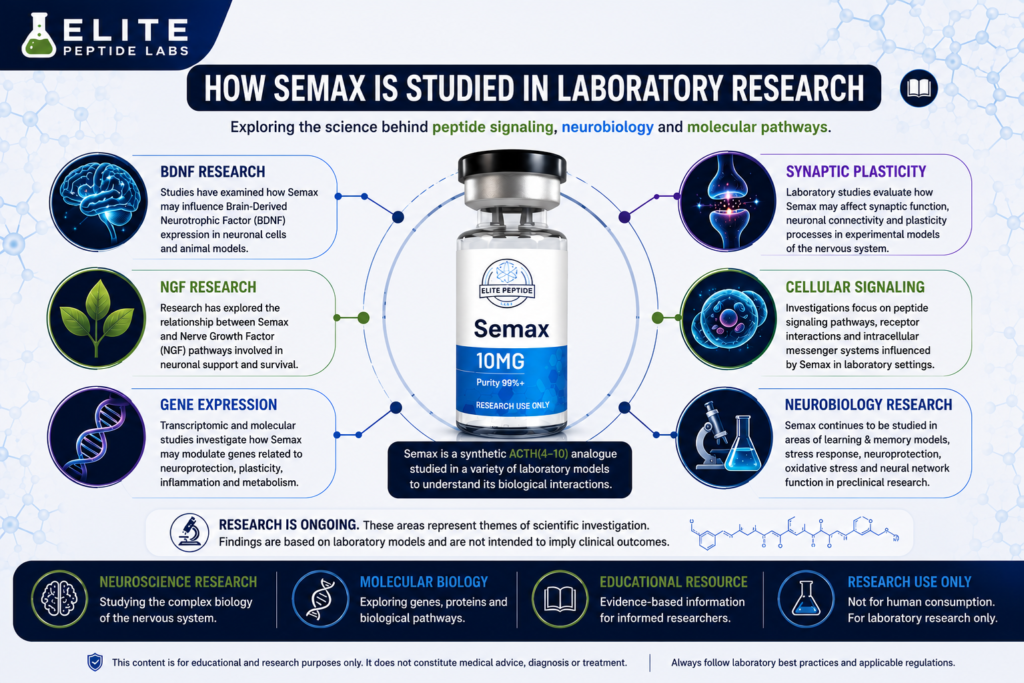
One of the reasons Semax continues to receive attention within neuroscience research is that it provides scientists with a useful model for investigating peptide signaling within the nervous system. Rather than focusing on a single biological pathway, published laboratory studies have explored how Semax interacts with several interconnected systems involved in cellular communication.
Because the central nervous system relies on thousands of signaling molecules working together, researchers often use peptides such as Semax to better understand how changes in one pathway may influence others. These investigations remain an active area of basic scientific research.
Areas of Ongoing Investigation
Current laboratory studies have explored Semax in relation to several biological processes, including:
- Peptide receptor signaling
- Neurotrophic factor expression
- Cellular stress responses
- Oxidative stress regulation
- Inflammatory signaling pathways
- Gene expression following experimental injury models
- Synaptic plasticity mechanisms
- Neuronal communication and signaling
Each of these represents an active field of scientific investigation rather than an established therapeutic application.
Brain-Derived Neurotrophic Factor (BDNF)
One of the most frequently discussed topics within the Semax literature is Brain-Derived Neurotrophic Factor (BDNF).
BDNF is a naturally occurring protein involved in neuronal growth, maintenance, and communication. It plays an important role in normal nervous system development and continues to support neuronal function throughout life.
Several experimental studies have investigated whether Semax influences the expression of genes associated with neurotrophic factors under laboratory conditions. These findings have generated continued scientific interest, although researchers emphasize that additional investigation is required to better understand the underlying biological mechanisms.
Nerve Growth Factor (NGF)
Alongside BDNF, researchers have also examined the relationship between Semax and Nerve Growth Factor (NGF).
NGF is another important neurotrophin involved in neuronal development, differentiation, and maintenance. Laboratory investigations have explored how peptide signaling may interact with NGF-related pathways during experimental research involving neuronal tissues and cell cultures.
Understanding these interactions helps researchers build broader models of nervous system biology rather than focusing on a single signaling molecule.
Gene Expression Research
Modern neuroscience increasingly examines how peptides influence gene expression rather than simply measuring immediate biochemical changes.
Several published studies have investigated how Semax may alter the activity of genes involved in:
- Cellular protection
- Signal transduction
- Immune modulation
- Neuroplasticity
- Energy metabolism
- Protein synthesis
These investigations typically use advanced laboratory techniques such as transcriptomic analysis to examine changes across hundreds or even thousands of genes simultaneously.
Such research contributes to a growing understanding of complex biological networks but should not be interpreted as demonstrating clinical effects.
A Systems Biology Approach
Rather than acting through one isolated mechanism, Semax is often studied using a systems biology approach.
This perspective recognizes that biological systems consist of interconnected signaling pathways where changes in one molecular process may influence many others. Modern peptide research therefore examines networks of interactions instead of single receptors or enzymes.
By combining molecular biology, genetics, biochemistry, and neuroscience, researchers continue working toward a more comprehensive understanding of how synthetic peptides behave under controlled laboratory conditions.
Research Summary
Current scientific literature suggests that Semax remains an active area of neuroscience research because of its potential relevance to multiple biological pathways involved in cellular communication. While many questions remain unanswered, ongoing laboratory investigations continue to expand scientific knowledge regarding peptide biology, neurotrophic signaling, and gene expression.
Current Areas of Semax Research
Interest in Semax has expanded considerably over the past two decades as researchers continue exploring its biological activity in experimental laboratory models. Rather than focusing on a single mechanism, many studies investigate how Semax interacts with multiple signaling pathways involved in neuronal communication, cellular adaptation, and molecular regulation.
While many questions remain unanswered, the growing body of preclinical literature has helped establish several major areas of scientific interest.
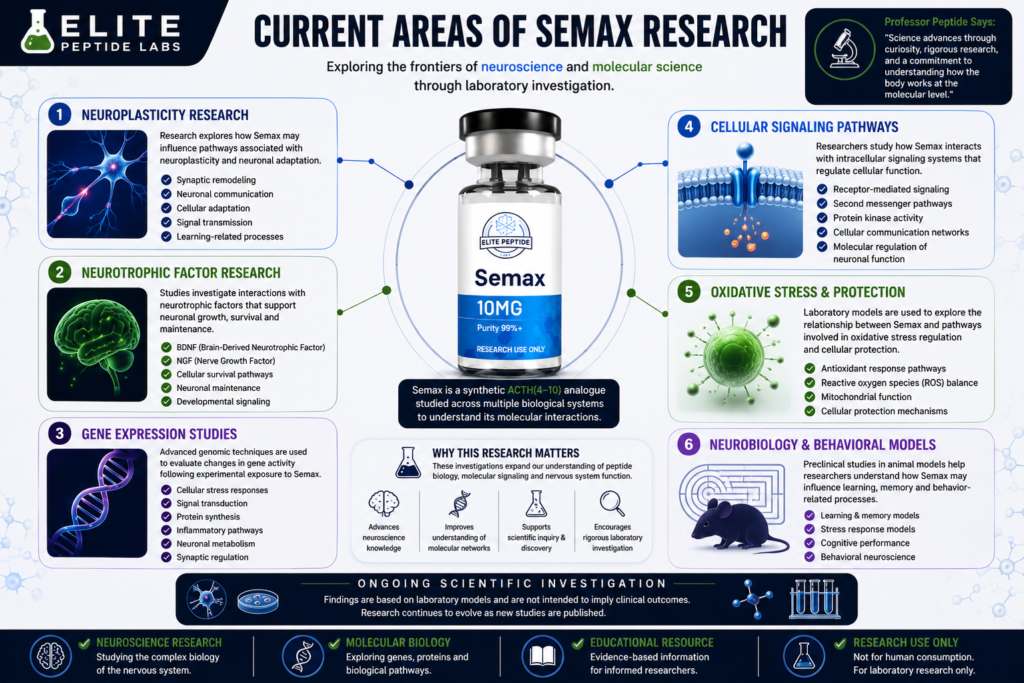
Neuroplasticity Research
One of the most frequently investigated topics is neuroplasticity—the ability of the nervous system to adapt, reorganize, and respond to changing conditions.
Researchers study whether Semax influences cellular pathways associated with:
- Synaptic remodeling
- Neuronal communication
- Cellular adaptation
- Signal transmission
- Learning-related molecular processes
These investigations are designed to better understand the basic biology of nervous system function rather than to demonstrate clinical outcomes.
Neurotrophic Factor Research
Semax is also widely studied because of its potential relationship with molecules known as neurotrophic factors, which support normal neuronal growth, maintenance, and cellular communication.
Laboratory investigations frequently examine interactions involving:
- Brain-Derived Neurotrophic Factor (BDNF)
- Nerve Growth Factor (NGF)
- Cellular survival pathways
- Neuronal maintenance mechanisms
- Molecular signaling involved in nervous system development
These studies seek to understand how peptide signaling networks operate under controlled laboratory conditions.
Gene Expression Studies
Another important area of research involves gene expression.
Scientists use genomic and transcriptomic techniques to evaluate whether exposure to Semax is associated with measurable changes in the activity of genes involved in:
- Cellular stress responses
- Signal transduction
- Protein synthesis
- Inflammatory pathways
- Neuronal metabolism
- Synaptic regulation
Modern sequencing technologies allow researchers to examine thousands of genes simultaneously, providing valuable insight into complex biological responses.
Cellular Signaling Pathways
Many experimental studies also investigate how Semax interacts with intracellular signaling systems.
Areas of interest include:
- Receptor-mediated signaling
- Second messenger pathways
- Protein kinase activity
- Cellular communication networks
- Molecular regulation of neuronal function
Understanding these signaling cascades helps researchers build a more complete picture of how peptide molecules interact with biological systems at the cellular level.
Why This Research Matters
Although many aspects of Semax biology continue to be investigated, these laboratory studies contribute to a broader understanding of peptide science, molecular biology, and neuroscience.
Each new experiment adds to the scientific literature by improving our understanding of:
- Biological signaling networks
- Molecular adaptation
- Nervous system biology
- Experimental peptide pharmacology
- Laboratory research methodology
As with all compounds discussed throughout the Elite Peptide Labs Research Library, these findings represent ongoing scientific investigation rather than established clinical conclusions.
How Researchers Continue to Study Semax
Semax has attracted scientific interest because of its broad range of biological interactions observed across experimental laboratory models. Rather than acting through a single pathway, published research suggests that Semax may influence multiple molecular systems involved in neuronal communication, cellular adaptation, and gene regulation.
As a result, investigators continue to explore Semax in diverse areas of neuroscience and molecular biology.
Current laboratory investigations commonly include:
- Neuroplasticity and synaptic remodeling
- Brain-Derived Neurotrophic Factor (BDNF) pathways
- Nerve Growth Factor (NGF) signaling
- Cellular signaling cascades
- Gene expression and transcriptional regulation
- Oxidative stress response mechanisms
- Learning and memory models
- Stress adaptation studies
- Neuroinflammatory pathways
- Experimental models of neuronal protection
It is important to recognize that these investigations are designed to improve scientific understanding of peptide biology rather than establish clinical outcomes. Most published studies involving Semax have been conducted using laboratory models, cell cultures, or experimental animals under controlled research conditions.
As scientific knowledge evolves, each new study contributes another piece to understanding how this synthetic peptide interacts with complex biological systems.
Why Multiple Research Models Matter
One of the reasons Semax remains an active topic of investigation is that biological systems are highly interconnected. Changes observed in one signaling pathway may influence several downstream processes, making it valuable for researchers to study the peptide from multiple scientific perspectives.
For example, investigators may examine:
- Molecular signaling pathways within individual cells
- Changes in protein production
- Gene transcription following peptide exposure
- Neuronal communication between brain cells
- Responses to experimentally induced stress
- Behavioral changes in animal research models
- Biomarkers associated with cellular adaptation
Studying these different endpoints allows researchers to build a more complete picture of peptide biology while improving reproducibility across independent laboratories.
Because scientific investigation is an ongoing process, conclusions continue to evolve as additional experimental evidence becomes available.
Research Summary
Current laboratory research continues to investigate Semax across multiple biological systems rather than focusing on a single mechanism. This multidisciplinary approach helps scientists better understand peptide signaling, neurobiology, and molecular regulation while contributing to the broader field of neuroscience research.
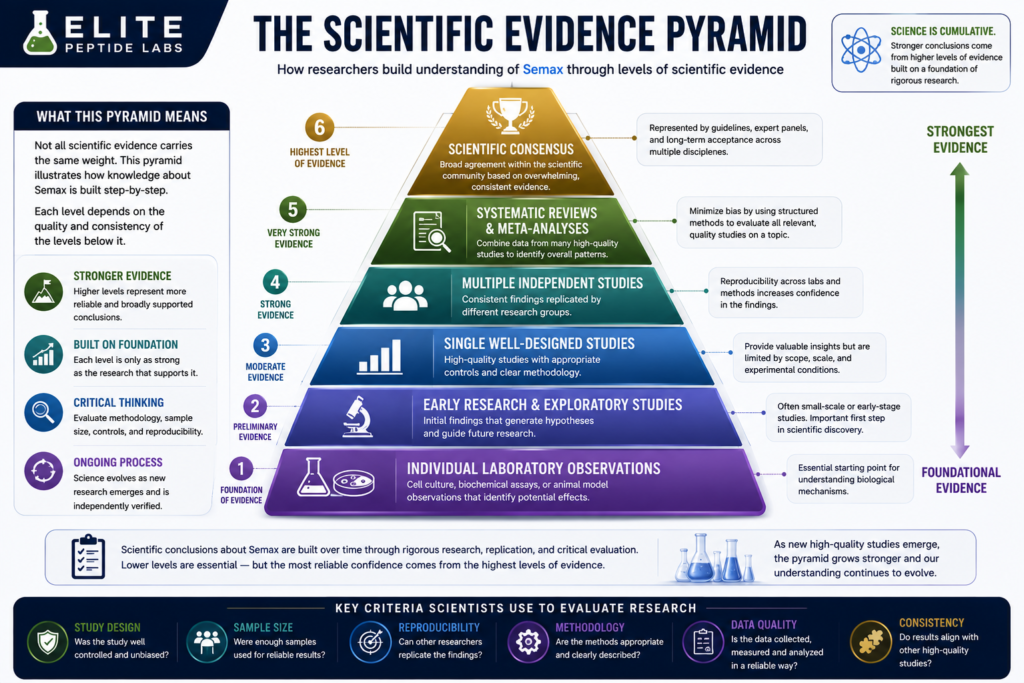
Understanding Scientific Evidence in Peptide Research
One of the most important aspects of peptide science is understanding how research findings are generated and interpreted. While published studies can provide valuable insights into biological mechanisms, the strength of scientific evidence depends on many factors, including study design, experimental methods, sample size, and reproducibility.
Researchers investigating Semax use a variety of laboratory models, each designed to answer different scientific questions. No single experiment can fully explain the biological behavior of a peptide. Instead, scientific understanding develops gradually as multiple independent studies contribute evidence over time.
This cumulative approach helps researchers identify consistent patterns while distinguishing preliminary observations from well-supported findings.
Common Types of Semax Research
Semax has been investigated using several different experimental approaches, each providing unique information about peptide biology.
Cell Culture Studies
Cell-based research allows scientists to examine how Semax interacts with individual cells under carefully controlled laboratory conditions. These studies often investigate molecular signaling pathways, gene expression, receptor activity, and changes in protein production.
Because environmental variables can be tightly controlled, cell culture experiments are valuable for exploring potential biological mechanisms before more complex models are considered.
Animal Models
Preclinical animal studies enable researchers to investigate how biological systems respond to Semax within an intact organism. These models may examine neurological processes, behavioral responses, stress adaptation, learning and memory, and other physiological systems under standardized laboratory conditions.
Animal research also allows investigators to observe interactions between multiple biological pathways that cannot be fully replicated in isolated cell cultures.
Molecular Biology Techniques
Modern peptide research frequently incorporates advanced molecular biology methods to better understand cellular responses following peptide exposure.
Examples include:
- Gene expression profiling
- RNA sequencing
- Protein quantification
- Immunohistochemistry
- Biomarker analysis
- Fluorescence imaging
- Microscopy-based cellular evaluation
These techniques help researchers investigate how changes at the molecular level relate to broader biological processes.
Why Reproducibility Matters
One hallmark of high-quality science is reproducibility—the ability for independent research groups to obtain similar findings when using comparable experimental methods.
A single study may generate interesting observations, but scientific confidence increases when multiple laboratories report consistent results across different experimental settings.
For this reason, researchers evaluate the overall body of evidence rather than relying on any one publication alone.
Systematic reviews, literature analyses, and independent replication studies all contribute to strengthening scientific understanding over time.
Interpreting Research Responsibly
Scientific publications should always be interpreted within the context of their experimental design.
Questions researchers commonly consider include:
- Was the study performed in cells, animals, or humans?
- How large was the study population?
- Were appropriate control groups included?
- Were findings independently replicated?
- Which laboratory methods were used?
- Do the conclusions align with other published research?
Considering these factors helps researchers critically evaluate scientific evidence and place individual findings within the broader scientific literature.
Scientific Knowledge Continues to Evolve
Peptide research is an active and continually evolving field. As new technologies become available and additional studies are published, researchers refine their understanding of how compounds such as Semax interact with biological systems.
Rather than viewing scientific conclusions as fixed, investigators recognize that knowledge advances through ongoing experimentation, independent verification, and careful analysis of emerging evidence.
This evidence-based approach remains the foundation of responsible scientific research and helps ensure that conclusions are supported by reproducible data rather than isolated observations.
Research Summary
Understanding how scientific evidence is generated is just as important as understanding the peptide itself. By considering study design, reproducibility, and the cumulative nature of research, scientists can more accurately interpret findings and contribute to a stronger, more reliable body of knowledge surrounding Semax and other research peptides.
Frequently Asked Questions
Below are answers to some of the most common questions researchers ask when first learning about Semax. These responses are intended for educational purposes and summarize information commonly discussed in the scientific literature.
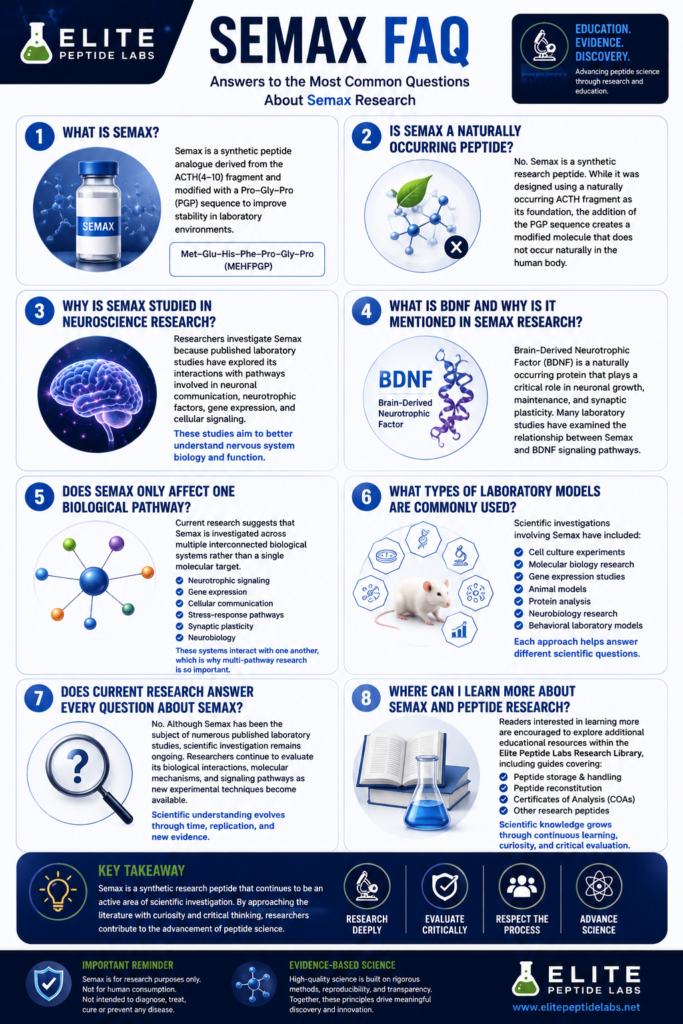
What is Semax?
Semax is a synthetic peptide analogue derived from the ACTH(4–10) fragment and modified with a Pro–Gly–Pro (PGP) sequence to improve stability in laboratory environments. It has been studied in neuroscience and molecular biology research because of its interactions with neurotrophic signaling pathways and cellular processes.
Is Semax a naturally occurring peptide?
No. Semax is a synthetic research peptide. While it was designed using a naturally occurring ACTH fragment as its foundation, the addition of the PGP sequence creates a modified molecule that does not occur naturally within the human body.
Why is Semax studied in neuroscience research?
Researchers investigate Semax because published laboratory studies have explored its interactions with pathways involved in neuronal communication, neurotrophic factors, gene expression, and cellular signaling. These investigations aim to better understand the biological mechanisms that regulate nervous system function.
What is BDNF and why is it mentioned in Semax research?
Brain-Derived Neurotrophic Factor (BDNF) is a naturally occurring protein that plays an important role in neuronal growth, maintenance, and synaptic plasticity. Numerous laboratory studies involving Semax have examined its relationship with BDNF signaling pathways, making it one of the most frequently discussed topics in the scientific literature.
Does Semax only affect one biological pathway?
Current research suggests that Semax is investigated across multiple interconnected biological systems rather than a single molecular target. Published studies have explored areas including neurotrophic signaling, gene expression, cellular communication, stress-response pathways, neurobiology, and synaptic plasticity.
Because these biological systems interact with one another, researchers often evaluate several pathways simultaneously within the same experimental model.
What types of laboratory models are commonly used?
Scientific investigations involving Semax have included:
- Cell culture experiments
- Molecular biology research
- Gene expression studies
- Animal models
- Protein analysis
- Neurobiology research
- Behavioral laboratory models
Each experimental approach helps answer different scientific questions and contributes unique information to the broader understanding of peptide biology.
Does current research answer every question about Semax?
No. Although Semax has been the subject of numerous published laboratory studies, scientific investigation remains ongoing. Researchers continue to evaluate its biological interactions, molecular mechanisms, and signaling pathways as new experimental techniques become available.
As with any active area of research, scientific understanding develops over time through independent replication, critical evaluation, and the accumulation of evidence.
Where can I learn more about Semax and peptide research?
Readers interested in learning more are encouraged to explore additional educational resources within the Elite Peptide Labs Research Library, including guides covering peptide storage, peptide reconstitution, Certificates of Analysis (COAs), and other research peptides.
Scientific understanding grows through continuous learning, careful evaluation of evidence, and a commitment to responsible laboratory research.
Research Summary
Semax continues to be an active subject of scientific investigation due to its diverse biological interactions and relevance to neuroscience research. While many questions have been explored in laboratory settings, research remains ongoing, and new findings continue to expand our understanding of this synthetic peptide. By approaching the scientific literature with curiosity, critical thinking, and an appreciation for evidence-based research, investigators can better interpret emerging data and contribute to the advancement of peptide science.
🧪 About the Elite Peptide Labs Research Library
The Elite Peptide Labs Research Library was created with a simple goal:
To provide clear, evidence-based educational resources that help readers better understand peptide science.
Rather than focusing on sensational headlines or speculation, every Research Library edition is designed to:
📚 Explain complex scientific concepts in plain language.
🔬 Summarize current areas of laboratory research.
⚖️ Distinguish between ongoing investigation and established scientific understanding.
🧠 Encourage thoughtful evaluation of published evidence.
🌍 Promote scientific curiosity through responsible education.
As the library continues to grow, new editions will explore additional peptides, laboratory techniques, biological pathways, and emerging areas of scientific interest.
Whether you’re reading your first article or your fiftieth, our mission remains the same:
Help readers understand the science—not just the conversation surrounding it.
📖 Continue Exploring the Research Library
Science is a journey, and every article adds another piece to the puzzle.
Continue your exploration with:
📘 RL-001
How to Store Research Peptides Properly: A Complete Laboratory Guide
Learn best practices for storage conditions, temperature stability, lyophilized peptides, reconstituted solutions, and laboratory handling techniques.
📘 RL-002
Understanding BPC-157: Current Research, Scientific Interest & Frequently Asked Questions
What researchers know, what they’re studying, and what remains unanswered.
📘 RL-003
The Complete Research Guide to Retatrutide – RL-003
Understanding One of the Most Exciting Areas of Modern Metabolic Research
📘 RL-004
How to Read a Certificate of Analysis (COA) – RL-004
How to Read a Certificate of Analysis (COA)
📘 RL-005
Peptide Reconstitution for Laboratory Research
📘 RL-006
The Complete Guide to Semax for Laboratory Research – RL-006
(You’re here now)
📘 Coming Soon
🧬 Tirzepatide Research Guide
🧬 Semaglutide Research Guide
🧬 GHK-Cu Research Guide
🧬 MOTS-c Research Guide
🧬 NAD⁺ Research Guide
🧬 TB-500 Research Guide
🧬 Understanding Peptides: A Beginner’s Guide
🧬 How Scientists Read Research Papers
🧬 Veterinary Peptide Research: Current Areas of Investigation
…and many more.
🧪 Professor Peptide’s Final Note
“The best researchers aren’t the ones with all the answers—they’re the ones who never stop asking thoughtful questions. Every experiment, every published paper, and every new discovery helps move science one step forward.”
📋 Research Library Standards
Every article published within the Elite Peptide Labs Research Library is developed using the same editorial principles:
✅ Evidence-based educational content
✅ Plain-language scientific explanations
✅ Balanced discussion of current laboratory research
✅ Clear distinction between investigation and established conclusions
✅ Commitment to scientific integrity and continuous learning
These principles help ensure consistency across the entire Research Library and reflect our commitment to responsible scientific communication.
⚠️ Research Use Notice
The information presented throughout this guide is provided solely for educational and informational purposes.
Products referenced on the Elite Peptide Labs website are intended exclusively for laboratory research, analytical testing, and scientific investigation.
They are not intended for human or veterinary use, nor are they intended to diagnose, treat, cure, or prevent any disease.
Readers are encouraged to evaluate published scientific literature carefully and consult original research whenever possible
References & Further Reading
Readers interested in exploring the scientific literature can begin with these reputable resources:
- Ashmarin, I. P., Nezavibatko, V. N., Levitskaya, N. G., et al. (1995). Nootropic analogue of ACTH(4–10): Semax. Neuroscience and Behavioral Physiology.
- Dolotov, O. V., Grivennikov, I. A., et al. (2006). Molecular mechanisms underlying the biological activity of Semax. Russian Journal of Bioorganic Chemistry.
- Andreeva, L. A., Kamensky, A. A., et al. (2010). Effects of Semax on gene expression in experimental models. Bulletin of Experimental Biology and Medicine.
- National Center for Biotechnology Information (NCBI). PubMed Database.
- UniProt Consortium. UniProt Protein Knowledgebase.
- Nature Reviews Neuroscience. Review articles on neuroplasticity, BDNF and neuronal signaling.
Scientific understanding continues to evolve. Readers are encouraged to consult original peer-reviewed publications when evaluating ongoing areas of peptide research.