



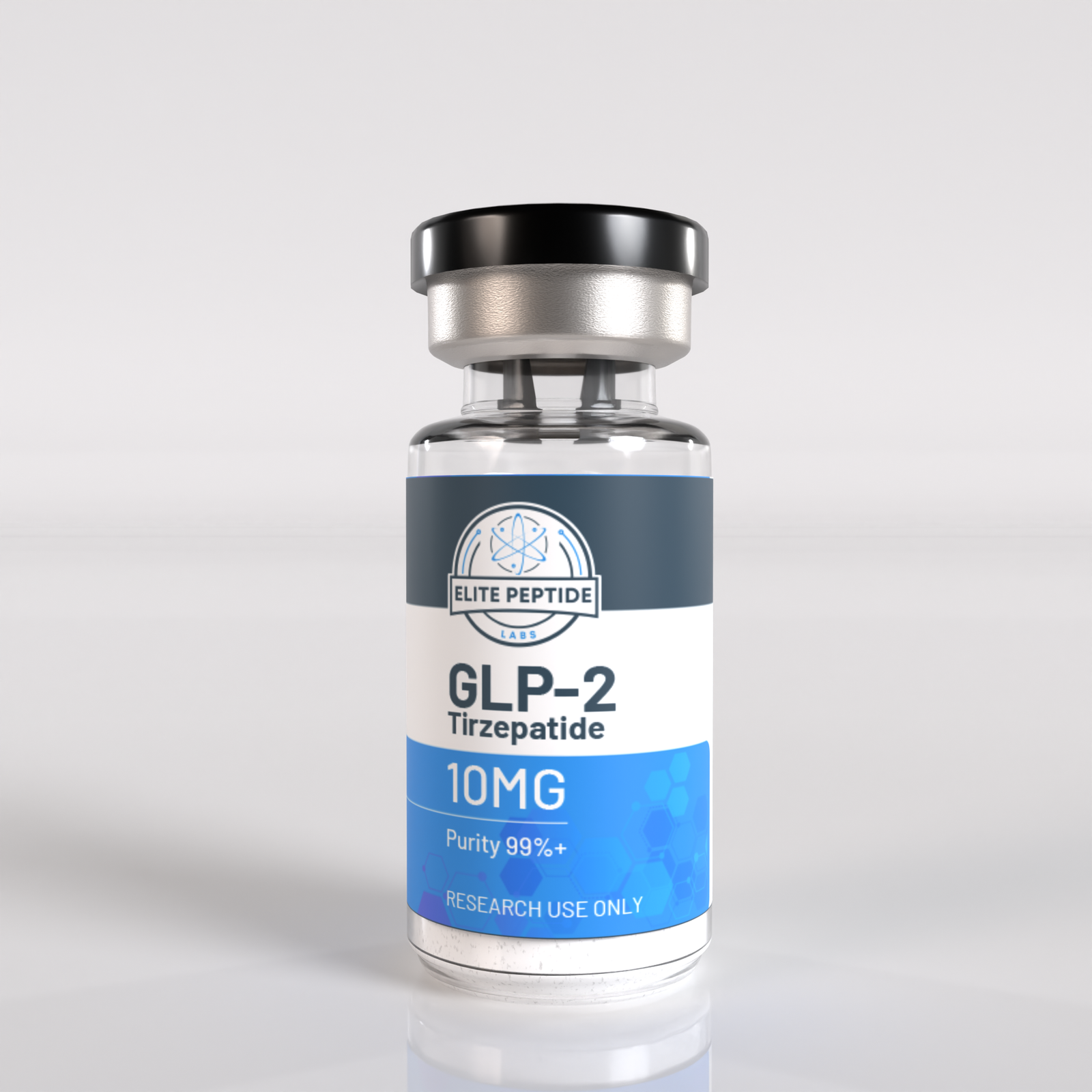
Tirzepatide
Tirzepatide
Tirzepatide is a premium research peptide developed exclusively for laboratory and scientific investigation. This investigational compound has become one of the most extensively studied peptides in metabolic and endocrine research due to its dual receptor activity involving glucose-dependent insulinotropic polypeptide (GIP) and glucagon-like peptide-1 (GLP-1) receptors.
Researchers continue investigating Tirzepatide for its potential role in metabolic regulation, glucose homeostasis, energy balance, appetite physiology, and endocrine function. While scientific understanding continues to evolve, Tirzepatide supplied by Elite Peptide Labs is intended exclusively for laboratory research applications.
At Elite Peptide Labs, every batch is produced to demanding quality standards, independently tested for purity, heavy metals, and supplied only for legitimate laboratory research purposes.
Product Highlights
- 10mg lyophilized powder
- Research-grade quality
- Third-party purity testing
- ≥99% purity
- Secure Canadian shipping
- Manufactured under strict quality standards
- Laboratory research use only
- Batch verified for consistency
What is Tirzepatide?
Tirzepatide is an investigational synthetic peptide designed to activate both GIP and GLP-1 receptors. Its dual-receptor mechanism distinguishes it from earlier peptides that primarily target a single metabolic pathway, making it an important compound for metabolic and endocrine laboratory research.
By simultaneously interacting with these two receptor systems, researchers continue investigating how Tirzepatide influences complex physiological processes involved in glucose regulation, energy metabolism, appetite signaling, and overall metabolic homeostasis.
Although substantial scientific literature continues to emerge, Tirzepatide supplied by Elite Peptide Labs is intended exclusively for laboratory research and should not be considered a therapeutic product.
Mechanism of Action
Current scientific literature indicates that Tirzepatide functions as a dual receptor agonist by interacting with:
- GLP-1 receptors
- GIP receptors
Researchers continue studying how activation of both receptor pathways may influence physiological processes differently than peptides targeting GLP-1 alone.
Laboratory investigations continue examining relationships between these signaling pathways and biological processes including:
- Glucose homeostasis
- Insulin signaling
- Appetite regulation
- Energy metabolism
- Body weight physiology
- Lipid metabolism
As scientific research progresses, additional information continues to emerge regarding the pharmacological characteristics and biological activity of this investigational peptide.
Research Applications
Tirzepatide has become an important investigational peptide within metabolic and endocrine research due to its dual receptor activity involving both GIP and GLP-1 signaling pathways. Scientists continue exploring how simultaneous activation of these receptors may influence complex physiological systems.
Current areas of laboratory investigation include:
Dual GIP/GLP-1 Signaling
Researchers continue studying how coordinated activation of both GIP and GLP-1 receptors influences intracellular signaling pathways, receptor interactions, and metabolic regulation.
Endocrine Physiology
Laboratory investigations examine the influence of Tirzepatide on endocrine signaling networks involved in hormonal regulation and metabolic function.
Glucose Regulation
Scientific studies continue evaluating the relationship between dual receptor activation and mechanisms associated with glucose homeostasis, insulin signaling, and glycemic regulation.
Energy Metabolism
Researchers investigate how Tirzepatide may influence metabolic efficiency, nutrient utilization, and whole-body energy balance within controlled experimental models.
Cardiometabolic Biomarkers
Current laboratory research explores potential relationships between Tirzepatide and biomarkers associated with metabolic physiology, cardiovascular research, and endocrine function.
These research areas remain under active scientific investigation and should not be interpreted as established clinical outcomes.
Product Specifications
| Specification | Details |
|---|---|
| Product | Tirzepatide |
| Quantity | 10mg |
| Form | Lyophilized powder |
| Purity | ≥99% |
| Intended Use | Laboratory Research Only |
| Appearance | White to off-white lyophilized powder |
| Quality Control | Third-party tested |
| Storage | Refrigerated until use |
Quality Assurance
Quality and consistency remain central to every product supplied by Elite Peptide Labs.
Each batch undergoes rigorous quality verification procedures designed to confirm identity, purity, and consistency before release. Independent third-party analytical testing helps ensure researchers receive a product that meets strict laboratory expectations.
Our quality program focuses on:
- Batch consistency
- Identity verification
- Purity analysis
- Secure packaging
- Careful handling throughout fulfillment
By maintaining consistent quality standards, Elite Peptide Labs strives to provide dependable research materials for universities, laboratories, biotechnology organizations, and qualified research professionals.
Storage & Handling
To preserve product integrity, most peptides should be stored according to accepted laboratory handling procedures.
General recommendations include:
- Store refrigerated between 2–8°C prior to reconstitution.
- Protect from excessive heat and prolonged light exposure.
- Keep sealed until required for laboratory research.
- Follow established laboratory handling protocols at all times.
- Store securely to maintain product stability.
Researchers should always follow their institutional procedures for peptide handling, preparation, storage, and disposal.
Why Choose Elite Peptide Labs?
Elite Peptide Labs was established to provide Canadian researchers with access to premium research peptides supported by transparent quality standards and dependable customer service.
Our commitment includes:
- Premium research-grade peptides
- Third-party analytical testing
- High purity standards
- Secure Canadian fulfillment
- Reliable packaging
- Responsive customer support
- Transparent quality practices
Our goal is to provide laboratories and researchers with confidence in every order.
Visit our main product page here for additional products and full details.
Frequently Asked Questions
What is Tirzepatide?
Tirzepatide is an investigational dual GIP and GLP-1 receptor agonist widely studied in metabolic and endocrine laboratory research.
What purity standard does Elite Peptide Labs provide?
Each batch is independently tested to verify high purity standards, with typical purity of 99% or greater.
How should peptides be stored?
Store refrigerated between 2–8°C before reconstitution and follow standard laboratory storage procedures.
Is Tirzepatide approved for medical use?
Tirzepatide supplied by Elite Peptide Labs is intended exclusively for laboratory research purposes. Researchers should consult applicable regulatory guidance regarding its research status and approved uses in their jurisdiction.
Who is this product intended for?
Research peptides supplied by Elite Peptide Labs are intended exclusively for qualified laboratory research conducted by educational institutions, biotechnology organizations, and research professionals.
Visit our peptide dosage calculator page here for information regarding laboratory peptide reconstitution with bacteriostatic water.
Research Use Disclaimer
For Laboratory Research Use Only.
This product is supplied exclusively for scientific, educational, and laboratory research purposes. It is not intended for human consumption, veterinary use, therapeutic application, diagnostic use, or cosmetic purposes. Elite Peptide Labs does not market or promote this product for use outside authorized research environments. Purchasers are responsible for ensuring compliance with all applicable local, provincial, national, and international regulations governing the acquisition, handling, storage, and use of research materials.
If you have any additional questions for us, please visit our Contact Page and our Service Team will respond to your inquiry within 24 hours.
Further Scientific Reading
Researchers interested in learning more about Tirzepatide may review publicly available scientific literature through the National Library of Medicine.
National Center for Biotechnology Information (NCBI)

Reviews
There are no reviews yet.