


The Complete Guide to Tirzepatide for Laboratory Research

RL-008
Tirzepatide Structure, Dual GIP/GLP-1 Receptor Activity, Mechanisms of Interest & Scientific Literature
Research Snapshot
| Reader Info | Tirzepatide Structure, Dual GIP/GLP-1 Receptor Activity, Mechanisms of Interest & Scientific Literature |
|---|---|
| 📖 Reading Time | ⏱️ 36–45 Minutes |
| 🎯 Difficulty | 🟢 Beginner Friendly |
| 🧪 Category | Research Peptide Guide |
| 📅 Last Updated | August 2026 Version 1.0 |
| 🏢 Published By | 📚 Elite Peptide Labs Research Library |
Introduction
Imagine designing a single peptide capable of interacting with two different metabolic signaling systems at the same time.
Not simply combining two compounds.
But engineering one molecular structure capable of activating both the glucose-dependent insulinotropic polypeptide receptor (GIPR) and the glucagon-like peptide-1 receptor (GLP-1R).
That peptide is Tirzepatide.
Tirzepatide has become an important subject within modern peptide and metabolic research because it represents a different approach to studying incretin biology.
Instead of selectively targeting one incretin receptor, tirzepatide was engineered as a dual GIP/GLP-1 receptor agonist.
This allows researchers to investigate an interesting biological question:
What happens when two related—but distinct—metabolic signaling pathways are activated by the same molecular structure?
The answer is more complicated than simply activating two receptors simultaneously.
Laboratory studies have shown that tirzepatide does not interact with GIPR and GLP-1R in exactly the same way.
Experimental research has characterized the molecule as an imbalanced dual agonist, demonstrating activity resembling native GIP at GIPR while exhibiting different pharmacological characteristics at GLP-1R.
Researchers have also reported distinctive intracellular signaling behavior involving cyclic adenosine monophosphate (cAMP), β-arrestin recruitment, and receptor internalization.
These observations have made tirzepatide relevant to several rapidly developing areas of peptide science, including:
- Dual-receptor agonism
- GIP receptor biology
- GLP-1 receptor biology
- GPCR signaling
- Biased agonism
- Receptor trafficking and internalization
- Incretin biology
- Glucose homeostasis
- Energy metabolism
- Structure–activity relationships
But understanding tirzepatide requires more than knowing which receptors it activates.
It requires understanding how the molecule was designed.
Why its amino-acid sequence differs from naturally occurring incretin hormones.
Why a fatty-acid component was incorporated into its structure.
How researchers discovered its unusual receptor-signaling characteristics.
And what modern laboratory studies are revealing about the relationship between peptide structure, receptor activation and downstream biological signaling.
Throughout Research Library Edition RL-008, we’ll explore tirzepatide from the molecule outward.
We’ll examine its structure, scientific development, dual GIP/GLP-1 receptor mechanism, signaling pathways, laboratory research models, major areas of scientific interest, and what the published literature currently tells us.
As with every article in the Elite Peptide Labs Research Library, our goal is not to make claims or predictions.
Our goal is to explain the science.
Because understanding what a molecule does begins with understanding how researchers study it.
⚡ Quick Answer
Tirzepatide is a 39-amino-acid synthetic peptide engineered to activate both the glucose-dependent insulinotropic polypeptide receptor (GIPR) and glucagon-like peptide-1 receptor (GLP-1R).
Because it interacts with two incretin receptors, tirzepatide is commonly described as a dual GIP/GLP-1 receptor agonist.
Laboratory research has investigated its molecular structure, receptor pharmacology, intracellular signaling, biased agonism, receptor trafficking, pancreatic islet biology, glucose regulation, energy metabolism and other aspects of incretin physiology.
Its dual-receptor design makes tirzepatide particularly useful for investigating how multiple signaling pathways can interact within the same experimental system.
🧪 Professor Peptide Says
“A peptide’s scientific story isn’t determined only by which receptors it activates. Sometimes the most interesting questions begin with how strongly it activates them—and what happens inside the cell afterward.”
What Is Tirzepatide?
Understanding a Dual GIP/GLP-1 Receptor Research Peptide
Tirzepatide is a synthetic 39-amino-acid linear peptide designed to interact with two important receptors involved in incretin signaling:
GIPR — Glucose-Dependent Insulinotropic Polypeptide Receptor
and
GLP-1R — Glucagon-Like Peptide-1 Receptor
Both belong to the class B family of G-protein-coupled receptors, commonly known as GPCRs.
That terminology can sound complicated at first.
However, the basic concept is relatively straightforward.
GIP and GLP-1 are naturally occurring peptide hormones involved in the biological response to nutrient intake.
Each communicates with cells through its corresponding receptor.
GIP → GIPR
GLP-1 → GLP-1R
When these molecules interact with their receptors, they can initiate intracellular signaling processes that researchers study in relation to glucose regulation, pancreatic islet biology, energy metabolism and broader metabolic physiology.
Tirzepatide was engineered differently.
Rather than selectively activating only one of these receptor systems, the molecule was designed to interact with both.
That characteristic is why tirzepatide is described as a:
Dual GIP/GLP-1 receptor agonist.
But “dual agonist” does not mean that tirzepatide interacts with both receptors identically.
That distinction is one of the most important concepts in understanding the molecule.
More Than Two Receptors
It would be easy to describe tirzepatide simply as a peptide that activates GIPR and GLP-1R.
Scientifically, however, that description leaves out much of what makes the compound interesting.
Research has shown that tirzepatide demonstrates different pharmacological behavior at the two receptors.
At GIPR, its activity has been described as resembling that of native GIP.
At GLP-1R, researchers have observed differences in receptor affinity, signaling potency and downstream receptor behavior compared with native GLP-1.
This has led investigators to describe tirzepatide as an imbalanced dual agonist.
The concept introduces an important principle in receptor biology:
A molecule can activate two receptors without activating both receptors in exactly the same way.
Researchers therefore evaluate more than whether receptor activation occurs.
They may also investigate:
- Receptor-binding affinity
- Signaling potency
- cAMP production
- β-arrestin recruitment
- Receptor internalization
- Receptor recycling
- Cellular response
- Duration of signaling
- Structure–activity relationships
These measurements can help researchers understand what happens after a peptide encounters its receptor.
Why Does Dual-Receptor Agonism Matter?
Investigating Two Incretin Signaling Systems
GIPR and GLP-1R participate in related areas of metabolic physiology, but they are not identical receptors.
They differ in their distribution, endogenous ligands, molecular interactions and biological signaling characteristics.
Traditionally, researchers could investigate these pathways separately.
A GIP-related compound could be used to investigate GIPR biology.
A GLP-1-related compound could be used to investigate GLP-1R biology.
Tirzepatide creates another experimental possibility.
Researchers can investigate what happens when one engineered molecule interacts with both systems.
This creates questions such as:
How does simultaneous GIPR and GLP-1R activation influence intracellular signaling?
Does the relative strength of activity at each receptor matter?
Can one receptor pathway modify biological responses associated with the other?
How does receptor trafficking change when the ligand produces a different signaling profile?
And can structural modifications to a peptide influence which intracellular pathways become more prominent?
These questions extend well beyond tirzepatide itself.
They contribute to the broader scientific study of multi-receptor peptide engineering.
🧪 Professor Peptide Says
“Two peptides can activate the same receptor and still produce different signaling patterns. In receptor biology, activation is often the beginning of the experiment—not the end.”
Tirzepatide at a Glance
| Scientific Characteristic | Description |
|---|---|
| Molecule type | Synthetic modified peptide |
| Peptide length | 39 amino acids |
| Common name | Tirzepatide |
| Primary structural inspiration | GIP-related peptide sequence |
| Primary receptor targets | GIPR and GLP-1R |
| Research classification | Dual GIP/GLP-1 receptor agonist |
| Receptor family | Class B G-protein-coupled receptors |
| Structural modification | Fatty-diacid-containing side chain designed to promote albumin association |
| Major signaling pathway studied | Gs-mediated cAMP signaling |
| Additional signaling areas | β-arrestin recruitment, receptor internalization and receptor trafficking |
| Common areas of investigation | Incretin biology, receptor pharmacology, metabolic signaling, pancreatic islet biology, glucose and energy homeostasis |
The areas above describe subjects investigated within scientific and experimental literature. They should not be interpreted as established outcomes for research conducted outside the conditions described in those studies.
The Scientific History of Tirzepatide
From Incretin Biology to Dual-Receptor Engineering
The scientific story of tirzepatide did not begin with tirzepatide itself.
It began decades earlier with researchers attempting to understand how the gastrointestinal system communicates with the pancreas after nutrients enter the body.
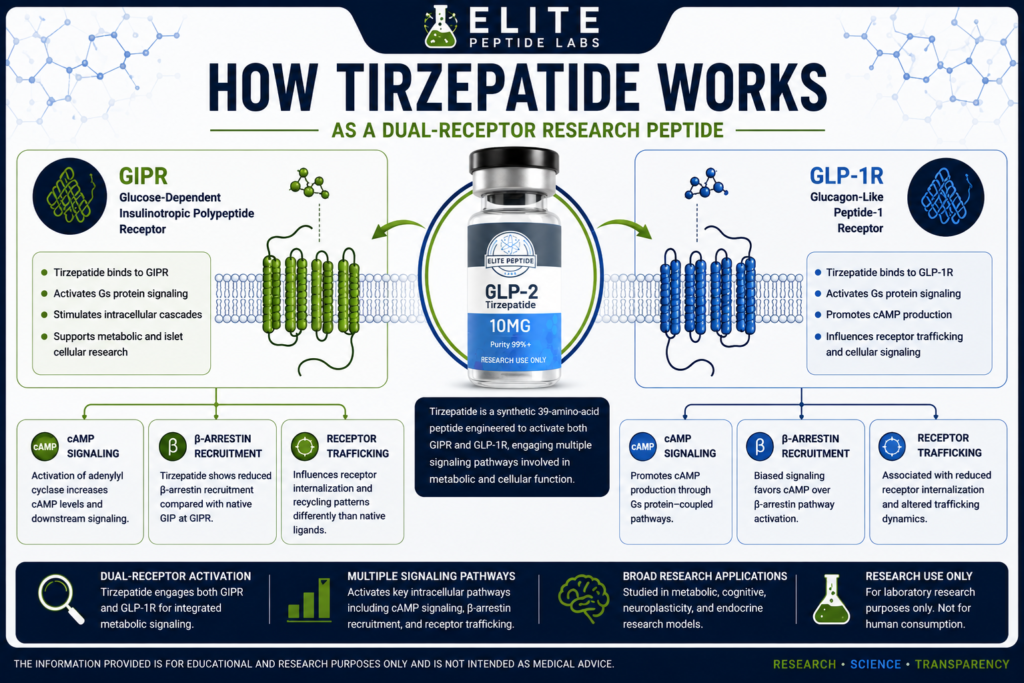
One of the most important discoveries to emerge from this work was the incretin effect.
Researchers observed that glucose introduced through the gastrointestinal system could produce a different insulin response than an equivalent amount delivered directly into circulation.
This suggested that signals originating in the digestive system were participating in glucose regulation.
Two peptide hormones eventually became central to this area of research:
GIP — glucose-dependent insulinotropic polypeptide
and
GLP-1 — glucagon-like peptide-1.
Both became important tools for understanding the relationship between nutrient sensing, pancreatic signaling and metabolic physiology.
But the two peptides would initially follow very different paths through scientific research.
The Rise of GLP-1 Research
GLP-1 became one of the most extensively investigated incretin hormones.
Researchers studied its interaction with the GLP-1 receptor (GLP-1R), a class B G-protein-coupled receptor expressed in multiple tissues and cell types.
The expanding GLP-1 literature demonstrated that activating this receptor could influence several biological processes associated with metabolic regulation.
That research eventually contributed to the development of numerous synthetic GLP-1 receptor agonists.
But scientists were still asking an important question:
Could the incretin system be investigated more effectively by targeting more than one receptor?
That question helped push peptide engineering in a new direction.
Rather than designing molecules that interacted with a single receptor, researchers began investigating unimolecular co-agonists — individual molecules engineered to interact with multiple receptor systems.
The idea represented an important shift.
Instead of:
one molecule → one receptor
researchers could investigate:
one molecule → multiple receptors → interacting signaling pathways.
This broader concept became known as unimolecular polypharmacy and helped establish the scientific foundation from which multi-receptor incretin peptides would emerge.
Why Add GIP?
Revisiting the Second Major Incretin Pathway
While GLP-1 research expanded rapidly, researchers continued investigating the biological role of GIP.
GIP interacts with the GIP receptor (GIPR), another member of the class B GPCR family.
Scientists became increasingly interested in whether GIP receptor activity could complement GLP-1 receptor signaling when incorporated into a single engineered molecule.
This created an intriguing research hypothesis:
Could simultaneous activation of GIPR and GLP-1R produce biological behavior that could not be fully explained by either receptor pathway alone?
Researchers began developing peptides specifically designed to explore that question.
Several experimental GIPR/GLP-1R co-agonists appeared during the development of the field.
Some were designed with relatively balanced activity between the two receptors.
Others exhibited different levels of activity at each receptor.
This distinction would eventually become particularly important to understanding tirzepatide.
The Development of LY3298176
The Research Compound That Became Tirzepatide
During this period of multi-receptor peptide research, scientists at Eli Lilly developed an experimental molecule known as:
LY3298176
Today, that molecule is known as tirzepatide.
The objective behind LY3298176 was straightforward but scientifically ambitious:
Create a single peptide capable of activating both GIPR and GLP-1R, while incorporating structural modifications that provided suitable molecular stability and prolonged biological persistence.
The resulting molecule was primarily based on the amino-acid sequence of GIP.
However, it was not simply a copy of native GIP.
Researchers introduced a series of modifications that changed its receptor pharmacology and molecular behavior.
The resulting peptide contained 39 amino acids, incorporated modified amino-acid residues, and included a fatty-diacid-containing side chain designed to promote albumin association and extend persistence.
These modifications produced something scientifically unusual:
A GIP-derived peptide capable of meaningful activity at both GIPR and GLP-1R.
2018: A Major Year for Tirzepatide Research
One of the foundational publications describing LY3298176 appeared in Molecular Metabolism in 2018.
Researchers led by Tamer Coskun characterized the molecule using several experimental approaches, including:
- Cell lines expressing incretin receptors
- In-vitro receptor-signaling assays
- Functional cellular assays
- Preclinical animal models
- Pharmacokinetic investigations
- Early human studies
The experiments demonstrated that LY3298176 could activate signaling through both GIP and GLP-1 receptors.
Importantly, the researchers were not merely determining whether the receptors could be activated.
They were investigating how the molecular design of the peptide translated into receptor pharmacology and biological signaling.
Around the same time, results from a randomized Phase 2 investigation of LY3298176 were published in The Lancet, expanding scientific interest in the compound and its dual-receptor design.
The molecule had moved from an interesting peptide-engineering concept into a extensively studied example of dual incretin receptor agonism.
A Different Kind of Dual Agonist
One of the most important findings to emerge from laboratory characterization was that tirzepatide does not simply activate GIPR and GLP-1R equally.
Its receptor pharmacology is more nuanced.
The molecule was engineered from a GIP-related sequence and demonstrates strong activity at GIPR while also activating GLP-1R.
Researchers subsequently investigated differences in its activity between the two receptor systems and the downstream signaling produced following receptor activation.
This is important because receptor pharmacology is not necessarily an on/off switch.
A peptide can interact with a receptor and influence:
how strongly the receptor signals,
which intracellular pathways become activated,
how the receptor is internalized,
and potentially how signaling changes over time.
This made tirzepatide interesting not only as a dual-receptor molecule, but as a research model for understanding the increasingly important concept of biased agonism.
We will examine that mechanism much more closely later in RL-008.
🧪 Professor Peptide Says
“Tirzepatide wasn’t created simply by putting GIP and GLP-1 together. Researchers engineered one peptide whose structure allows it to interact with both receptor systems — and then discovered that those interactions are not identical.”
Tirzepatide Research Timeline
| Period | Scientific Development |
|---|---|
| Early incretin research | Scientists investigate gastrointestinal signals involved in nutrient-dependent metabolic responses. |
| GIP & GLP-1 identified | Two major incretin peptide systems become important subjects of metabolic research. |
| GLP-1 receptor research expands | GLP-1R becomes extensively investigated in receptor biology and metabolic physiology. |
| Multi-receptor peptide engineering emerges | Researchers begin developing single molecules capable of interacting with multiple metabolic receptors. |
| Dual GIPR/GLP-1R research develops | Experimental co-agonists are designed to investigate simultaneous incretin receptor activation. |
| LY3298176 developed | Researchers develop the 39-amino-acid dual GIP/GLP-1 receptor agonist later known as tirzepatide. |
| 2018 | Foundational preclinical, receptor-signaling and early clinical research on LY3298176 is published. |
| 2018 onward | Tirzepatide becomes a major research model for dual incretin receptor pharmacology and metabolic signaling. |
Why Tirzepatide Became Scientifically Important
Tirzepatide represents more than another molecule within incretin research.
Its development illustrates a larger evolution occurring in peptide science.
Researchers increasingly moved from asking:
“What happens when we activate this receptor?”
toward asking:
“What happens when one engineered molecule coordinates activity across multiple receptor systems?”
That shift opened the door to increasingly sophisticated peptide designs involving dual agonists, triple agonists and other multi-receptor research compounds.
Tirzepatide became one of the most prominent examples of this approach.
And understanding why requires looking directly at the molecule itself.
Because its unusual pharmacology begins with its structure.
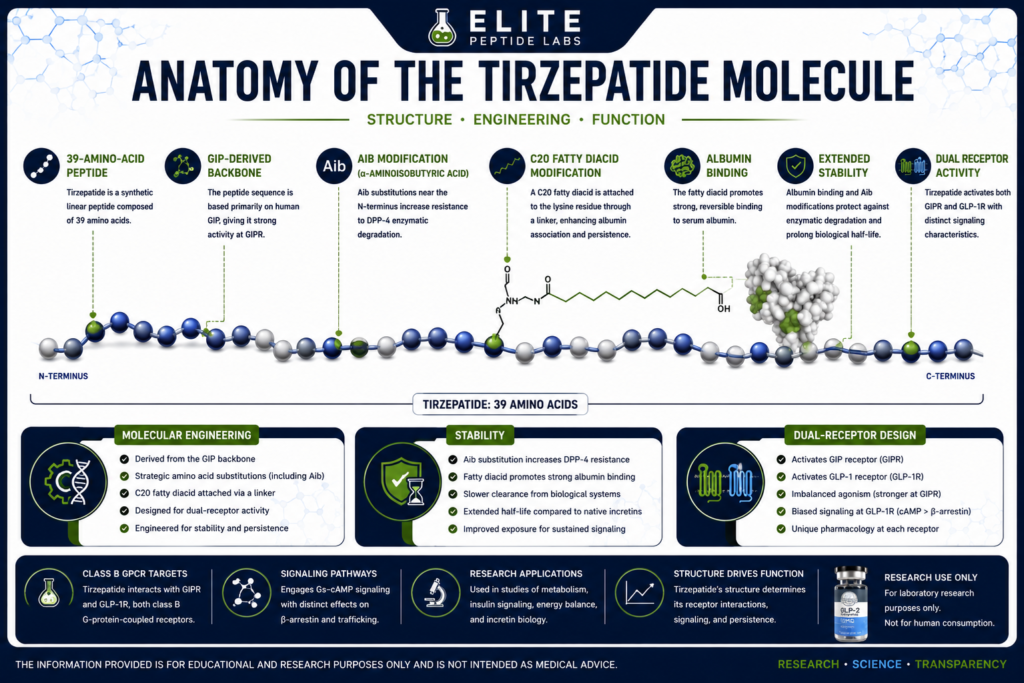
Molecular Structure of Tirzepatide
Understanding the structure of tirzepatide is important because the molecule was deliberately engineered to interact with two different incretin receptors while maintaining sufficient stability for extended biological investigation.
Tirzepatide is a synthetic linear peptide composed of 39 amino acids. Its sequence is primarily based on glucose-dependent insulinotropic polypeptide (GIP), but several modifications were introduced to alter receptor activity, improve molecular stability, and extend the persistence of the peptide.
This makes tirzepatide considerably more than a simple synthetic copy of a naturally occurring incretin hormone.
Instead, it can be viewed as an engineered multi-receptor peptide whose structural characteristics help determine how it interacts with both the GIP receptor (GIPR) and the GLP-1 receptor (GLP-1R).
A 39-Amino-Acid Peptide Engineered from GIP
Native human GIP is a 42-amino-acid peptide hormone involved in incretin signaling.
Tirzepatide was developed using the GIP sequence as an important structural foundation, while introducing specific amino-acid substitutions and other molecular modifications.
These changes allow the resulting molecule to retain substantial activity at GIPR while also interacting with GLP-1R.
This dual activity is one of the defining characteristics of tirzepatide and separates it from peptides designed primarily around selective GLP-1 receptor activation.
From a research perspective, this creates an interesting structure-function relationship.
Small changes to a peptide’s amino-acid sequence can influence:
- receptor affinity
- receptor selectivity
- signaling potency
- enzymatic stability
- receptor trafficking
- intracellular signaling behavior
- biological persistence
Tirzepatide therefore provides researchers with an example of how peptide engineering can be used to modify both receptor pharmacology and molecular behavior.
The Role of the C18 Fatty Diacid
Another major structural feature of tirzepatide is the incorporation of a C18 fatty diacid moiety.
This lipid component is attached to the peptide through a linker and contributes to the molecule’s ability to associate with serum albumin.
Albumin binding is important because it can reduce the rate at which a peptide is cleared or degraded within experimental biological systems.
The result is substantially greater biological persistence than would typically be expected from many naturally occurring peptide hormones.
This principle—sometimes referred to broadly as lipidation—has become an important strategy in modern peptide engineering.
By attaching lipid-based structures to peptide molecules, researchers can investigate how changes in albumin association and molecular distribution affect peptide stability and receptor exposure.
For tirzepatide, the C18 fatty diacid is therefore not simply an additional chemical component. It is an important part of the molecule’s overall pharmacological design.
Protection Against Enzymatic Degradation
Naturally occurring incretin hormones can be rapidly degraded by enzymes.
One of the most important enzymes involved in incretin metabolism is dipeptidyl peptidase-4 (DPP-4).
Native GIP and GLP-1 contain structural features that make them susceptible to DPP-4-mediated cleavage, which contributes to their relatively short biological persistence.
Tirzepatide incorporates an amino-acid modification near the beginning of the peptide sequence involving α-aminoisobutyric acid (Aib).
This modification increases resistance to DPP-4-mediated degradation.
From a molecular-engineering perspective, this demonstrates an important principle in peptide research:
Changing even a small portion of a peptide sequence can substantially alter its susceptibility to enzymatic cleavage.
When this increased enzymatic stability is combined with the molecule’s fatty-diacid modification and albumin-binding characteristics, tirzepatide exhibits a substantially different stability profile from native incretin peptides.
Structure Determines Receptor Behavior
Perhaps the most scientifically interesting aspect of tirzepatide’s structure is that its modifications do more than simply increase stability.
They also influence how the molecule interacts with its target receptors.
Experimental research has shown that tirzepatide does not behave identically at GIPR and GLP-1R.
At the GIP receptor, its pharmacological activity has been characterized as relatively similar to native GIP.
At the GLP-1 receptor, however, tirzepatide displays a different signaling profile.
Studies examining GLP-1R signaling have reported comparatively strong activation of cAMP-mediated signaling, while β-arrestin recruitment and receptor internalization can differ from the signaling patterns produced by native GLP-1.
This has contributed to tirzepatide being investigated within the broader field of biased agonism.
Rather than viewing receptor activation as a simple ON/OFF event, biased agonism recognizes that a ligand may activate the same receptor while preferentially influencing certain intracellular signaling pathways over others.
For researchers studying GPCR biology, this distinction is particularly important.
Two molecules may interact with the same receptor yet produce different patterns of:
G-protein activation → second-messenger production → β-arrestin recruitment → receptor internalization → receptor recycling → downstream cellular signaling
Tirzepatide provides a useful research model for examining how molecular structure may contribute to these differences.
Why Tirzepatide’s Structure Matters in Laboratory Research
Taken together, the structural characteristics of tirzepatide illustrate several major concepts in modern peptide science.
The molecule combines:
A GIP-derived peptide backbone
↓
Targeted amino-acid substitutions
↓
Resistance to enzymatic degradation
↓
C18 fatty-diacid modification
↓
Albumin-binding characteristics
↓
Dual GIPR/GLP-1R activity
↓
Distinct receptor-signaling behavior
This combination is one reason tirzepatide has attracted considerable attention in metabolic and receptor-signaling research.
Rather than studying only whether a peptide activates a particular receptor, researchers can use compounds such as tirzepatide to investigate the relationship between molecular structure, receptor selectivity, signaling bias, stability, and downstream biological activity.
That relationship becomes especially important in the next section, where we can examine what happens after tirzepatide reaches GIPR and GLP-1R and how activation of those receptors produces intracellular signaling.
Research Notice: This discussion describes tirzepatide in the context of molecular and laboratory research. Elite Peptide Labs products are intended for laboratory research use only and are not intended for human consumption, medical use, diagnosis, treatment, or prevention of disease.
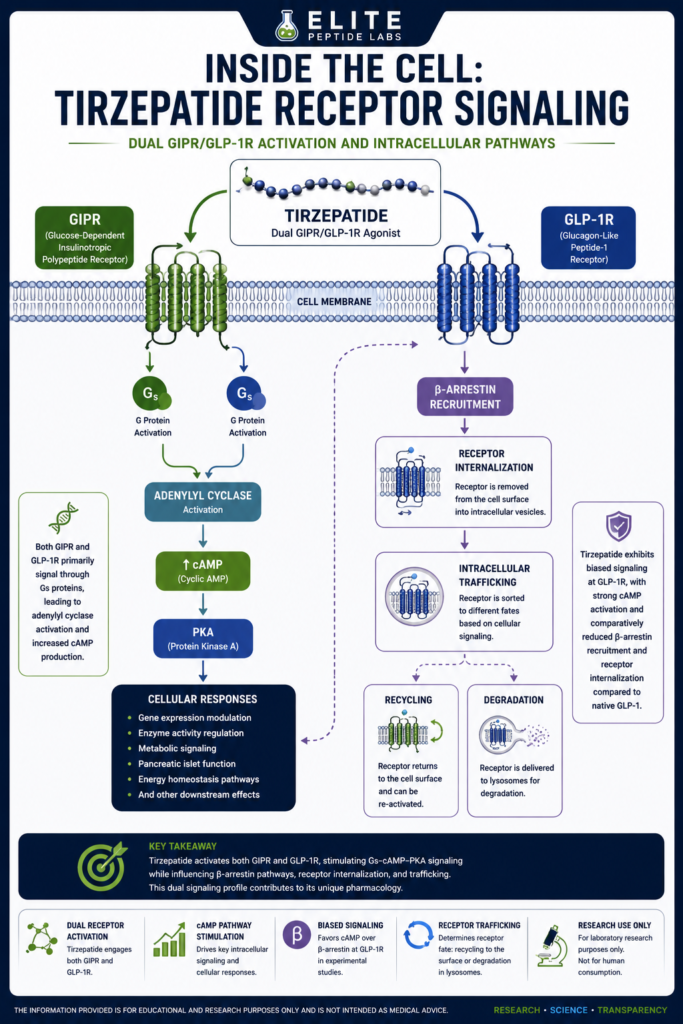
Tirzepatide’s Dual-Receptor Mechanism — GIPR and GLP-1R Signaling
One of the defining characteristics of tirzepatide is its ability to activate two distinct incretin receptors within a single molecule: the glucose-dependent insulinotropic polypeptide receptor (GIPR) and the glucagon-like peptide-1 receptor (GLP-1R).
Both receptors belong to the class B family of G-protein-coupled receptors (GPCRs) and participate in metabolic and endocrine signaling. However, GIPR and GLP-1R are separate receptors with different endogenous ligands, tissue-expression patterns, regulatory mechanisms, and downstream biological roles.
Tirzepatide therefore provides researchers with an opportunity to investigate an important concept in peptide pharmacology:
What happens when two related—but biologically distinct—receptor systems are activated by a single engineered peptide?
GIPR: The GIP Receptor
The GIP receptor (GIPR) is the natural receptor for glucose-dependent insulinotropic polypeptide, historically known as gastric inhibitory polypeptide.
GIP is an incretin hormone released primarily from K cells of the small intestine in response to nutrient exposure. Once released, GIP interacts with GIPR in several tissues, with pancreatic islet signaling representing one of the most extensively studied areas of its biology.
GIPR activation is coupled predominantly to the stimulatory G protein Gs.
When an agonist binds to the receptor, the resulting signaling cascade can be simplified as:
GIPR activation
↓
Gs protein activation
↓
Adenylyl cyclase
↓
Increased intracellular cAMP
↓
Protein kinase A (PKA) and other cAMP-sensitive pathways
↓
Changes in downstream cellular signaling
This pathway makes cyclic adenosine monophosphate (cAMP) an important experimental marker when researchers investigate GIPR activity.
Tirzepatide demonstrates substantial agonist activity at GIPR, reflecting the molecule’s GIP-derived structural foundation.
However, GIPR activation represents only one half of its receptor pharmacology.
GLP-1R: The GLP-1 Receptor
The second major target is the GLP-1 receptor (GLP-1R).
GLP-1R is another class B GPCR and is activated naturally by glucagon-like peptide-1.
Like GIPR, GLP-1R can couple to Gs proteins and stimulate adenylyl cyclase, increasing intracellular cAMP concentrations.
The basic signaling pathway therefore appears similar:
GLP-1R activation
↓
Gs protein activation
↓
Adenylyl cyclase
↓
cAMP production
↓
Downstream intracellular signaling
Yet receptor pharmacology is considerably more complex than this simplified pathway suggests.
GPCRs can interact with multiple signaling and regulatory proteins, and the particular ligand bound to a receptor can influence the relative strength of these pathways.
This is especially important when studying tirzepatide.
Tirzepatide Is an “Imbalanced” Dual Agonist
Although tirzepatide activates both GIPR and GLP-1R, experimental research indicates that it does not activate the two receptors with identical pharmacological characteristics.
This has led researchers to describe tirzepatide as an imbalanced GIPR/GLP-1R dual agonist.
At GIPR, tirzepatide demonstrates activity broadly comparable to native GIP in several experimental systems.
Its interaction with GLP-1R is different.
Research comparing tirzepatide with native GLP-1 has found reduced affinity and potency at GLP-1R in certain experimental assays.
That might initially appear counterintuitive: why engineer a molecule that is not simply maximally potent at both receptors?
The answer highlights an increasingly important concept in receptor pharmacology.
The biological behavior of an agonist is determined by more than receptor-binding strength alone.
How the receptor signals after ligand binding can be equally important.
cAMP Signaling and β-Arrestin Recruitment
After activation, GPCR signaling can proceed through several intracellular pathways.
Two particularly relevant areas in tirzepatide research are:
G-protein-mediated cAMP signaling
and
β-arrestin recruitment.
β-arrestins are regulatory proteins involved in processes including receptor desensitization, internalization, trafficking, and additional intracellular signaling.
When certain agonists strongly activate a GPCR, β-arrestin recruitment can contribute to removal of receptors from the cell surface through receptor internalization.
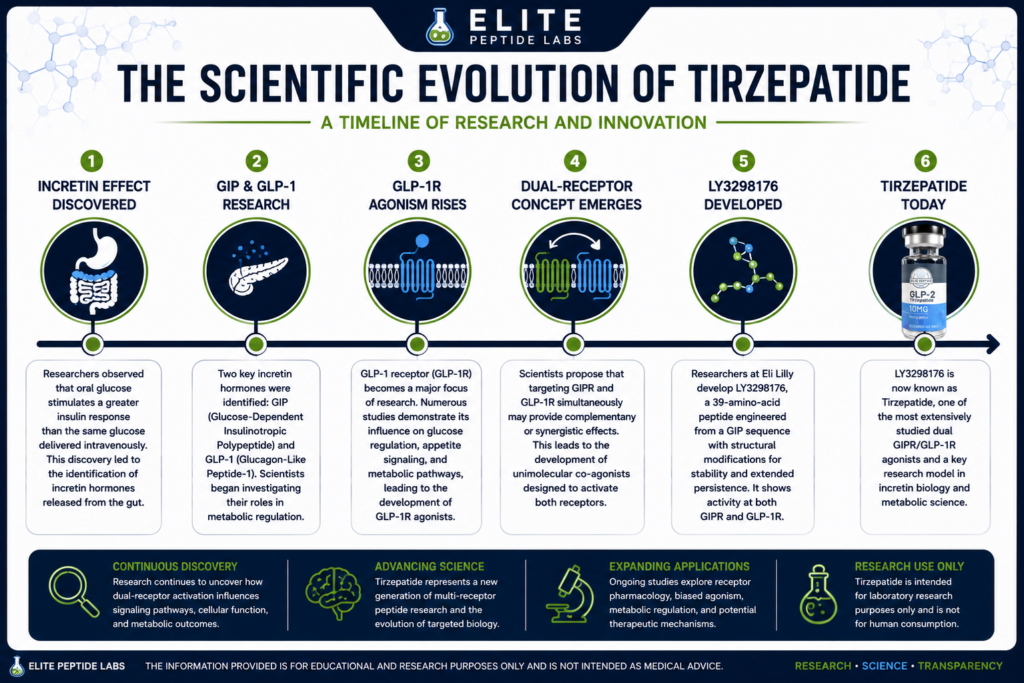
Tirzepatide has demonstrated an interesting signaling profile at GLP-1R.
Experimental studies have reported that its signaling can be relatively biased toward cAMP production compared with β-arrestin recruitment.
In simplified terms:
Tirzepatide binds GLP-1R
↓
Strong Gs/cAMP signaling
↓
Comparatively reduced β-arrestin recruitment
↓
Altered receptor internalization and trafficking
This phenomenon is one reason tirzepatide has attracted attention beyond metabolic research alone.
It has also become a useful molecule for studying biased agonism at GPCRs.
What Is Biased Agonism?
Traditional descriptions of receptor pharmacology often present activation as a relatively simple process:
Ligand → Receptor → Cellular Response
Modern GPCR research has shown that receptor signaling can be much more nuanced.
Different ligands binding to the same receptor may stabilize different receptor conformations. Those conformational differences can influence which intracellular signaling pathways are preferentially activated.
This phenomenon is commonly called biased agonism or functional selectivity.
Instead of asking only:
“Does this molecule activate GLP-1R?”
researchers can ask:
“What pattern of signaling does this molecule produce after activating GLP-1R?”
That distinction opens several experimental questions.
Does the ligand preferentially activate G proteins?
How strongly does it recruit β-arrestins?
How rapidly is the receptor internalized?
Does the receptor recycle back to the cell membrane?
How long does signaling persist?
Do different signaling profiles produce different downstream cellular responses?
Tirzepatide provides an especially interesting model for investigating these questions because its GLP-1R signaling profile differs from that of native GLP-1.
Receptor Internalization and Trafficking
Receptors are not permanently fixed to the surface of a cell.
Following activation, many GPCRs undergo a process known as internalization, during which receptors are moved from the plasma membrane into intracellular compartments.
From there, several outcomes are possible.
The receptor may be:
- recycled back to the cell surface
- retained temporarily within intracellular compartments
- directed toward degradation
- involved in additional intracellular signaling
These processes are collectively described as receptor trafficking.
Research suggests that tirzepatide can produce different GLP-1R internalization and trafficking behavior compared with native GLP-1.
This provides another example of how the structure of a peptide can influence not simply whether a receptor becomes activated, but what happens to that receptor after activation occurs.
Two Receptors, Multiple Levels of Signaling
The pharmacology of tirzepatide can therefore be viewed at several interconnected levels:
Tirzepatide
↓
GIPR + GLP-1R activation
↓
G-protein signaling
↓
Adenylyl cyclase activation
↓
cAMP production
↓
PKA and downstream signaling pathways
while simultaneously influencing:
β-arrestin recruitment
↓
Receptor internalization
↓
Receptor trafficking and recycling
This multi-layered signaling profile is considerably more informative than simply describing tirzepatide as a peptide that “activates two receptors.”
Its scientific significance lies partly in the ability to investigate how receptor balance and signaling quality may influence downstream biological responses.
Why Dual-Receptor Signaling Matters for Research
Tirzepatide represents an important development in the broader evolution of multi-receptor peptide engineering.
Rather than designing molecules around a single biological target, researchers can investigate whether coordinated activation of multiple related receptor systems produces signaling characteristics that cannot be reproduced by targeting either receptor independently.
For laboratory research, tirzepatide has consequently become relevant to investigations involving:
- GIPR pharmacology
- GLP-1R pharmacology
- incretin receptor signaling
- cAMP-mediated pathways
- GPCR biased agonism
- β-arrestin recruitment
- receptor internalization and trafficking
- pancreatic islet signaling
- metabolic regulation
- multi-receptor peptide design
These mechanisms provide the molecular foundation for many of the experimental observations associated with tirzepatide in metabolic research.
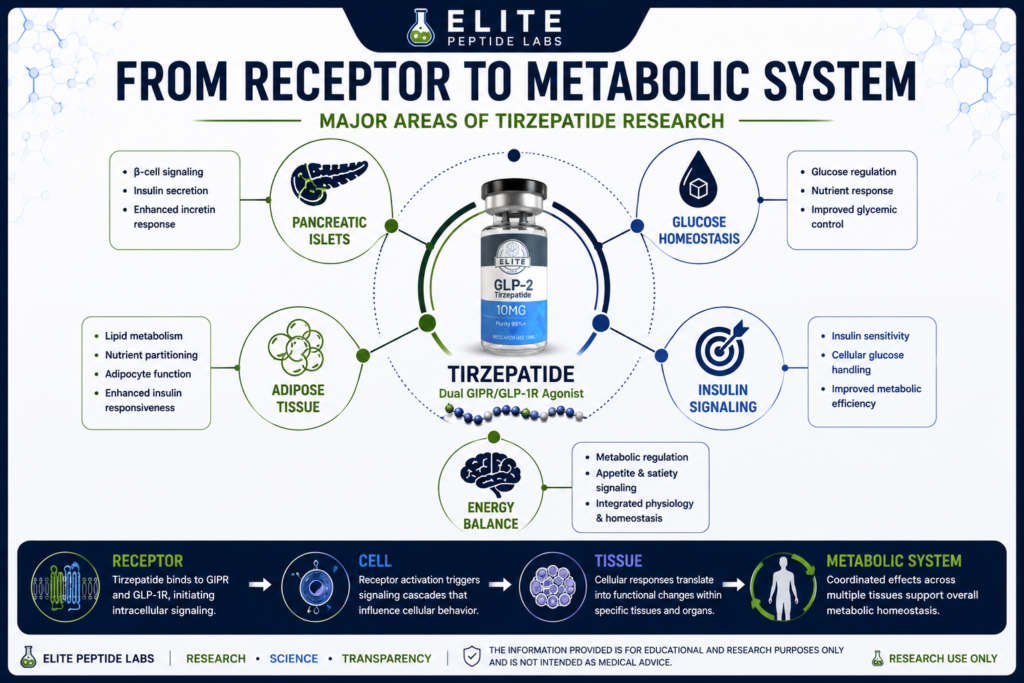
Major Areas of Tirzepatide Research — Glucose Regulation, Insulin Signaling & Metabolic Physiology
The dual-receptor pharmacology of tirzepatide has created interest across several areas of metabolic research.
While the molecular mechanisms discussed in the previous section occur at the receptor and intracellular level, researchers are ultimately interested in understanding how these signaling pathways influence larger physiological systems.
Among the most extensively investigated areas are:
- glucose homeostasis
- pancreatic islet biology
- insulin secretion and signaling
- insulin sensitivity
- adipose-tissue metabolism
- lipid handling and nutrient partitioning
- energy balance
- integrated metabolic physiology
These areas are closely interconnected.
Rather than affecting a single metabolic pathway, activation of GIPR and GLP-1R can influence multiple systems involved in how nutrients are detected, processed, stored, and utilized.
Pancreatic Islet and Insulin-Signaling Research
One major area of investigation involves the pancreatic islets, particularly insulin-producing β-cells.
GIP and GLP-1 are classified as incretin hormones partly because they can enhance glucose-dependent insulin secretion.
Both GIPR and GLP-1R are expressed in pancreatic β-cells, making the islet an especially useful experimental system for investigating the combined receptor activity of tirzepatide.
Studies using primary islets have demonstrated that tirzepatide can engage incretin-receptor signaling involved in insulin secretion. Experimental work has also provided evidence that GIPR contributes directly to tirzepatide-mediated hormone secretion in human islets.
This allows researchers to investigate questions such as:
How does simultaneous GIPR and GLP-1R activation affect β-cell signaling?
Do the two receptors produce complementary intracellular signals?
Does biased signaling at GLP-1R alter the resulting cellular response?
What contribution does GIPR activation make when both receptors are present on the same cell?
These questions illustrate why tirzepatide has become useful not simply as a metabolic research compound, but as a tool for studying incretin-receptor interaction within pancreatic cells.
Glucose Homeostasis
Another major research area involves glucose homeostasis — the collection of biological processes responsible for maintaining glucose availability within an appropriate physiological range.
Glucose regulation involves far more than insulin secretion alone.
It reflects interactions among multiple tissues and processes, including:
Nutrient detection
↓
Incretin signaling
↓
Pancreatic hormone secretion
↓
Insulin action
↓
Cellular glucose uptake
↓
Hepatic and peripheral glucose metabolism
Because tirzepatide activates two incretin receptors, researchers can examine how coordinated receptor signaling influences this broader regulatory network.
Human studies investigating metabolic biomarkers have reported changes associated with both β-cell function and insulin sensitivity, supporting the idea that the metabolic effects associated with tirzepatide cannot necessarily be explained through a single pathway.
This makes tirzepatide particularly interesting for studying the concept of integrated metabolic control.
Insulin Sensitivity
Insulin sensitivity describes how effectively insulin-responsive tissues react to insulin signaling.
Skeletal muscle, adipose tissue, and the liver all contribute to whole-body insulin sensitivity, although they do so through different biological mechanisms.
Research examining tirzepatide has therefore investigated whether dual GIPR/GLP-1R activation influences markers associated with insulin action in addition to its effects on pancreatic hormone secretion.
In one investigation of metabolic biomarkers, researchers observed changes in measures associated with β-cell function and insulin sensitivity. Importantly, statistical analysis suggested that changes in insulin sensitivity were only partly explained by changes in body weight, indicating that additional mechanisms may contribute to the observed metabolic effects.
That finding raises an important research question:
Can dual incretin-receptor signaling influence insulin sensitivity through mechanisms that extend beyond changes in energy balance alone?
This remains an active area of investigation.
Adipose Tissue and Nutrient Metabolism
Adipose tissue is another increasingly important area of GIP research.
Rather than functioning simply as passive energy storage, adipose tissue is a metabolically active organ involved in:
- lipid storage and mobilization
- glucose utilization
- endocrine signaling
- nutrient partitioning
- insulin responsiveness
- whole-body energy regulation
Experimental research using human adipocytes and animal models has found that long-acting GIPR activation can interact with insulin signaling and influence glucose uptake, lipid metabolism, and nutrient handling.
Interestingly, these effects can vary depending upon the metabolic state being studied.
Under insulin-present conditions, GIPR agonism has been observed experimentally to enhance aspects of glucose and lipid handling, whereas different effects on lipid mobilization can emerge when insulin concentrations are lower.
This highlights another important principle:
Metabolic receptor signaling can depend heavily on physiological context.
The same receptor pathway may therefore produce different downstream effects depending upon nutrient availability, hormonal conditions, tissue type, and experimental model.
Energy Balance and Metabolic Integration
GIPR and GLP-1R signaling are also investigated within broader systems controlling energy balance.
These receptors are not restricted to pancreatic tissue.
Research into incretin biology has examined receptor activity across metabolically relevant tissues and within the central nervous system, creating interest in how incretin signaling may coordinate nutrient intake, energy utilization, glucose regulation, and lipid metabolism.
This systems-level perspective is particularly important for understanding multi-receptor compounds.
Instead of thinking about tirzepatide as:
one molecule → one receptor → one effect
researchers can investigate a much broader network:
Tirzepatide
↓
GIPR + GLP-1R
↓
Pancreatic signaling
+
Adipose-tissue signaling
+
Central signaling pathways
+
Insulin-sensitive tissues
↓
Integrated metabolic physiology
This complexity is one of the major reasons dual- and multi-receptor peptides have become such an active field of research.
GIP and GLP-1 May Contribute Differently
An especially important point is that GIP and GLP-1 should not be viewed as interchangeable signaling systems.
Although both are incretin hormones, their receptors have distinct expression patterns and physiological characteristics.
The pharmacological profile of tirzepatide adds another layer of complexity because its activity is itself imbalanced between GIPR and GLP-1R.
Experimental pharmacology indicates relatively strong GIPR engagement alongside a distinctive GLP-1R signaling profile favoring cAMP signaling over β-arrestin recruitment.
Consequently, researchers continue to investigate whether the biological characteristics associated with tirzepatide arise from:
GIPR activation
+ GLP-1R activation
+ the balance between those receptors
+ signaling bias within the receptors
+ interactions among different metabolic tissues
rather than from any single mechanism independently.
From Receptor Pharmacology to Whole-System Research
Taken together, the research surrounding tirzepatide illustrates how peptide science can progress across multiple levels of biological organization.
At the molecular level:
Peptide structure determines receptor interaction.
At the cellular level:
Receptor interaction determines intracellular signaling.
At the tissue level:
Cellular signaling influences processes such as pancreatic hormone secretion, adipocyte metabolism, and insulin responsiveness.
At the physiological level:
These systems interact to influence integrated glucose and energy homeostasis.
Understanding those connections is essential when interpreting tirzepatide research.
It also explains why scientists continue to investigate the compound across models ranging from receptor-binding assays and cultured cells to isolated human islets, animal models, and controlled human studies.
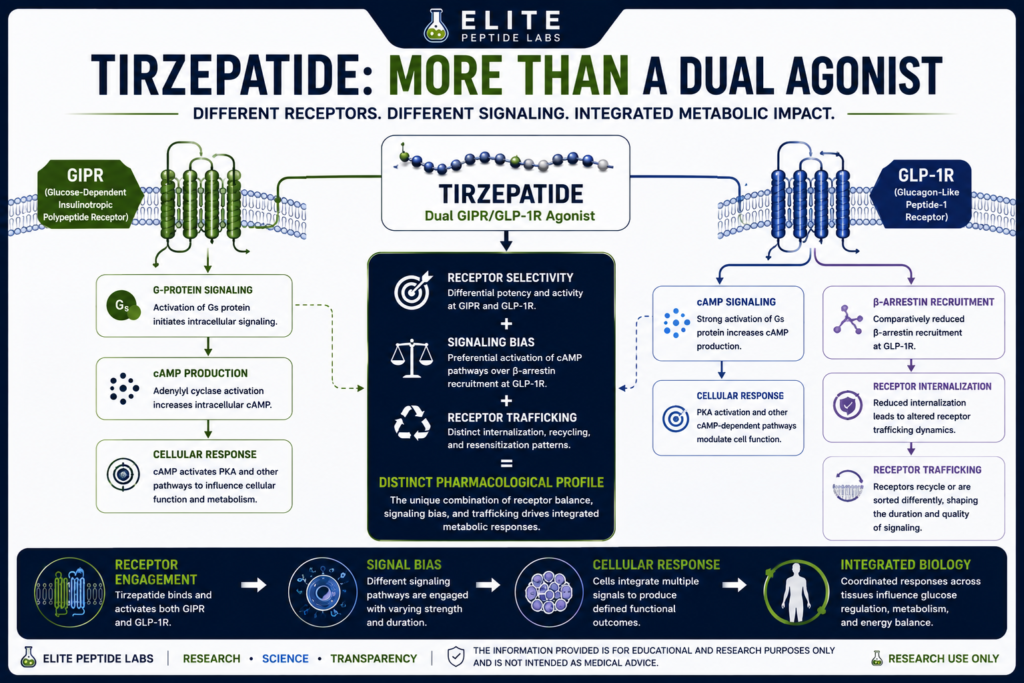
Biased Agonism and Receptor Selectivity — Why Tirzepatide Is More Than a Simple Dual Agonist
Describing tirzepatide as a dual GIP/GLP-1 receptor agonist is scientifically accurate, but that description alone does not fully capture its pharmacology.
One of the most important findings to emerge from laboratory studies is that tirzepatide does not necessarily interact with GIPR and GLP-1R in identical ways.
Instead, researchers have characterized tirzepatide as having an imbalanced or asymmetric pharmacological profile, with signaling characteristics that differ between the two receptors. This distinction has become an important area of research because it suggests that the biological activity of a multi-receptor peptide may depend not only on which receptors are activated, but also on how those receptors are activated.
Receptor Activation Is Not an On/Off Switch
It is tempting to think of receptor agonism as a simple process:
Ligand binds receptor → receptor switches on → biological response occurs.
Modern GPCR research has demonstrated that the process can be considerably more complex.
GIPR and GLP-1R belong to the G-protein-coupled receptor (GPCR) family. When activated, these receptors can initiate multiple intracellular events, including signaling through G proteins, production of cyclic adenosine monophosphate (cAMP), recruitment of regulatory proteins such as β-arrestins, receptor internalization, and subsequent receptor recycling or degradation.
Different ligands interacting with the same receptor can favor these processes to different degrees.
This phenomenon is commonly known as biased agonism or biased signaling.
Rather than producing an identical downstream response every time a receptor is activated, different ligands can effectively produce different signaling profiles from the same receptor.
Tirzepatide and the GIP Receptor
Tirzepatide was engineered using a peptide backbone derived primarily from GIP, and GIPR activation represents an important component of its molecular design.
Experimental research has continued to investigate what this GIPR component contributes to tirzepatide’s overall biological activity.
This question is particularly interesting because GIP biology extends beyond pancreatic β-cell signaling. GIP receptors have also been investigated in tissues involved in nutrient handling and metabolic regulation, including adipose tissue.
Recent experimental work using human adipocytes and animal models found that long-acting GIPR activation could influence several aspects of adipocyte nutrient metabolism, including insulin signaling, glucose uptake, lipid handling, and nutrient partitioning.
Other preclinical research has reported that GIPR agonism contributes to improvements in insulin sensitivity and glucose disposal in white adipose tissue, demonstrating why the GIP component of tirzepatide remains an active area of mechanistic investigation.
Importantly, researchers are still working to determine precisely how much of tirzepatide’s integrated activity can be attributed to GIPR signaling versus GLP-1R signaling and interactions between the two pathways.
Tirzepatide and the GLP-1 Receptor
The GLP-1R side of tirzepatide’s pharmacology is equally interesting.
Laboratory studies indicate that tirzepatide does not behave exactly like native GLP-1 when interacting with GLP-1R.
One area of particular interest involves the balance between cAMP signaling and β-arrestin recruitment.
Tirzepatide has been reported to exhibit a GLP-1R signaling profile biased toward cAMP production relative to β-arrestin recruitment, alongside differences in receptor internalization and trafficking.
This means two compounds could theoretically activate the same GLP-1 receptor while producing somewhat different intracellular signaling patterns.
That distinction is important because receptor internalization influences how long receptors remain available at the cell surface and how cells respond to continued ligand exposure.
Researchers therefore study not merely whether tirzepatide activates GLP-1R, but also:
- the magnitude of receptor activation;
- which intracellular signaling pathways are preferentially engaged;
- β-arrestin recruitment;
- receptor internalization and trafficking;
- receptor recycling and resensitization; and
- how these processes compare with native incretin peptides and selective receptor agonists.
These characteristics have helped make tirzepatide an important research model for understanding ligand-specific GPCR signaling.
The Importance of Signal Balance
This leads to a larger concept underlying tirzepatide research.
A multi-receptor peptide does not necessarily need to activate every target with identical potency to produce meaningful integrated biological activity.
Instead, researchers can investigate whether a particular balance of receptor engagement creates a distinct signaling environment.
Conceptually, tirzepatide can therefore be viewed as producing several interacting layers of activity:
GIPR activation
↓
GLP-1R activation
↓
Different relative receptor pharmacology
↓
Distinct intracellular signaling profiles
↓
Integrated cellular and tissue responses
This represents a considerably more sophisticated model than simply describing the molecule as two receptor agonists combined into one peptide.
Why Biased Agonism Matters in Peptide Engineering
The broader significance extends beyond tirzepatide itself.
Historically, drug discovery often focused heavily on whether a molecule could bind to and activate a particular receptor. Modern receptor pharmacology increasingly investigates the quality and pattern of the signal produced after receptor binding.
That creates another dimension for peptide engineering.
Researchers can potentially investigate molecules based on several variables simultaneously:
Receptor selection → relative potency → signaling bias → receptor trafficking → duration of signaling → integrated biological response
Tirzepatide provides an especially interesting example because these principles occur within a single engineered peptide capable of engaging two related incretin receptors.
The scientific question therefore becomes more sophisticated than:
“Does tirzepatide activate GIPR and GLP-1R?”
A more useful research question is:
“How does tirzepatide activate each receptor, which signaling pathways are preferentially engaged, and how does that particular signaling balance influence the resulting biological response?”
That question remains central to ongoing research into tirzepatide and the broader development of multi-receptor peptide systems.
From Dual Agonism to Multi-Receptor Peptide Design
Tirzepatide also represents part of a broader evolution in metabolic peptide research.
Instead of investigating individual signaling systems entirely in isolation, researchers are increasingly studying compounds capable of integrating multiple receptor pathways within a single molecular structure.
The progression can be viewed conceptually as:
Single-Receptor Peptides
↓
Dual-Receptor Agonists
↓
Signal-Balanced Multi-Receptor Peptides
↓
Engineered Polyagonists
↓
More Precisely Tuned Receptor Pharmacology
Research into GIP/GLP-1 co-agonism has therefore helped establish a wider framework for studying how multiple endocrine pathways might be coordinated through a single engineered molecule.
Tirzepatide is especially valuable from a research perspective because its pharmacology demonstrates that multi-receptor peptide design is not simply about activating more receptors.
The relative strength, duration, bias, and intracellular consequences of each receptor interaction may be just as important as the number of receptors involved.
That makes tirzepatide not only a compound of interest in metabolic research, but also an important case study in the continuing development of rationally engineered multi-receptor peptides.
Research Note: The precise contribution of GIPR activation, GLP-1R activation, signaling bias, receptor trafficking, and their interactions to tirzepatide’s overall biological effects remains an active area of investigation. Mechanistic findings should therefore be interpreted within the specific experimental models in which they were observed.
What the Scientific Literature Shows — Major Findings in Tirzepatide Research
Tirzepatide has become the subject of an unusually broad scientific literature spanning peptide engineering, receptor pharmacology, structural biology, cellular signaling, metabolic physiology, and clinical investigation.
For laboratory researchers, however, some of the most informative studies are not necessarily those examining large-scale clinical outcomes. The mechanistic literature provides a deeper look at why tirzepatide behaves differently from native incretin peptides and how its engineered structure influences receptor activity.
Several major themes have emerged.
7.1 Dual GIPR and GLP-1R Activity
One of the foundational findings in tirzepatide research is its ability to activate both the glucose-dependent insulinotropic polypeptide receptor (GIPR) and the glucagon-like peptide-1 receptor (GLP-1R).
This distinguishes tirzepatide from compounds designed primarily around selective GLP-1R agonism.
Early pharmacological characterization demonstrated that tirzepatide possesses substantial activity at GIPR while also maintaining agonist activity at GLP-1R. Importantly, the relative activity at these two receptors is not identical.
That observation helped establish the concept of tirzepatide as an imbalanced dual agonist rather than a molecule producing equivalent pharmacology at both receptor systems.
This distinction has subsequently become central to attempts to understand its molecular behavior.
7.2 Evidence for Biased GLP-1R Signaling
As discussed in the previous section, receptor activation involves considerably more than simple ligand binding.
Experimental studies examining tirzepatide at GLP-1R have identified differences between its effects on G-protein-mediated signaling, cAMP production, β-arrestin recruitment, and receptor internalization.
This has led researchers to investigate tirzepatide as an example of biased agonism.
Rather than activating every downstream pathway to the same relative degree as native GLP-1, tirzepatide appears capable of producing a distinctive signaling profile at GLP-1R.
The implications extend beyond tirzepatide itself.
These experiments demonstrate how relatively subtle changes in peptide structure may influence not only receptor affinity, but also the intracellular consequences of receptor activation.
7.3 Structural Biology Has Revealed Receptor-Level Interactions
Advances in structural biology have allowed researchers to investigate incretin receptors at increasingly fine resolution.
Techniques including cryo-electron microscopy (cryo-EM) have been used to examine receptor complexes and investigate how peptide ligands occupy and activate their receptors.
For tirzepatide research, structural studies provide an important bridge between:
Peptide sequence
↓
Receptor binding
↓
Receptor conformation
↓
Intracellular signaling
This is particularly valuable because tirzepatide contains engineered structural features that distinguish it from endogenous GIP and GLP-1.
Structural research can therefore help investigators determine how those modifications influence interactions with GIPR and GLP-1R and potentially contribute to the compound’s unusual pharmacological profile.
7.4 Pancreatic Islet Research
The incretin system has long been associated with pancreatic islet biology.
Both GIPR and GLP-1R signaling have therefore been investigated extensively in relation to β-cell function, nutrient-responsive signaling, and glucose-dependent insulin secretion.
Tirzepatide provides researchers with a way to investigate these systems simultaneously.
Rather than studying GIP and GLP-1 pathways entirely independently, dual-receptor agonism allows researchers to examine how signaling through both receptor systems may interact within integrated experimental models.
This has generated interest in questions involving:
- β-cell receptor signaling
- glucose-responsive cellular behavior
- cAMP-dependent signaling
- insulin secretory pathways
- receptor desensitization
- incretin pathway interactions
These studies contribute to a broader understanding of how endocrine signals coordinate nutrient-dependent physiology.
7.5 Adipose Tissue and Nutrient Metabolism
GIPR expression and signaling outside the pancreas have also become important areas of investigation.
In particular, researchers have examined adipose tissue as a potential site through which GIP signaling may influence nutrient handling.
Experimental models have investigated relationships between GIPR activation and processes such as glucose uptake, insulin responsiveness, lipid metabolism, and nutrient partitioning.
This area is particularly relevant to dual-agonist research because it raises an important mechanistic question:
Does combining GIPR and GLP-1R activity create tissue-level responses that differ from targeting either receptor independently?
Answering that question requires moving beyond receptor assays into cellular, tissue, and whole-system models.
7.6 Integrated Metabolic Physiology
As research progresses from isolated receptors to increasingly complex biological systems, tirzepatide provides a model for studying the interaction between multiple metabolic signaling pathways.
Researchers have examined systems involving:
Incretin signaling → pancreatic function → glucose regulation → insulin signaling → adipose metabolism → energy homeostasis
These systems should not be interpreted as independent pathways.
They form an interconnected regulatory network in which changes occurring at one level can influence responses elsewhere.
This is one reason multi-receptor peptides are scientifically interesting: they allow investigators to examine what happens when multiple components of that network are influenced by the same engineered ligand.
7.7 Human Studies as Translational Evidence
Tirzepatide has also been investigated extensively in controlled human clinical studies.
Those studies are important to the scientific literature because they demonstrate that the molecular and physiological effects observed in experimental research can translate into measurable biological outcomes in humans.
For the purposes of the Elite Peptide Labs Research Library, however, these findings should be interpreted as published scientific evidence concerning the pharmaceutical compound, rather than as directions for use of laboratory research materials.
Commercially manufactured research peptides and approved pharmaceutical products are not interchangeable categories.
Our focus in RL-008 therefore remains on the underlying molecular biology, receptor pharmacology, signaling mechanisms, and experimental research surrounding tirzepatide.
A Larger Lesson From Tirzepatide Research
Taken together, the literature surrounding tirzepatide illustrates an important development in modern peptide science.
Researchers are no longer limited to asking:
Which receptor does this molecule activate?
Increasingly, the questions are:
Which receptors does it activate?
With what relative potency?
Which intracellular pathways are preferentially engaged?
How are those receptors internalized and recycled?
Which tissues respond to those signals?
And what happens when multiple signaling systems are deliberately combined within a single engineered peptide?
Tirzepatide sits at the intersection of all of these questions.
For that reason, its scientific significance extends beyond any single metabolic outcome. It provides researchers with a model for understanding how molecular engineering, multi-receptor pharmacology, biased signaling, and integrated physiology can converge within a single peptide system.
Research Context: Findings discussed in this section originate from different experimental systems, including receptor assays, cell models, animal studies, structural investigations, and controlled clinical research. Results from one experimental model should not automatically be assumed to apply to another.
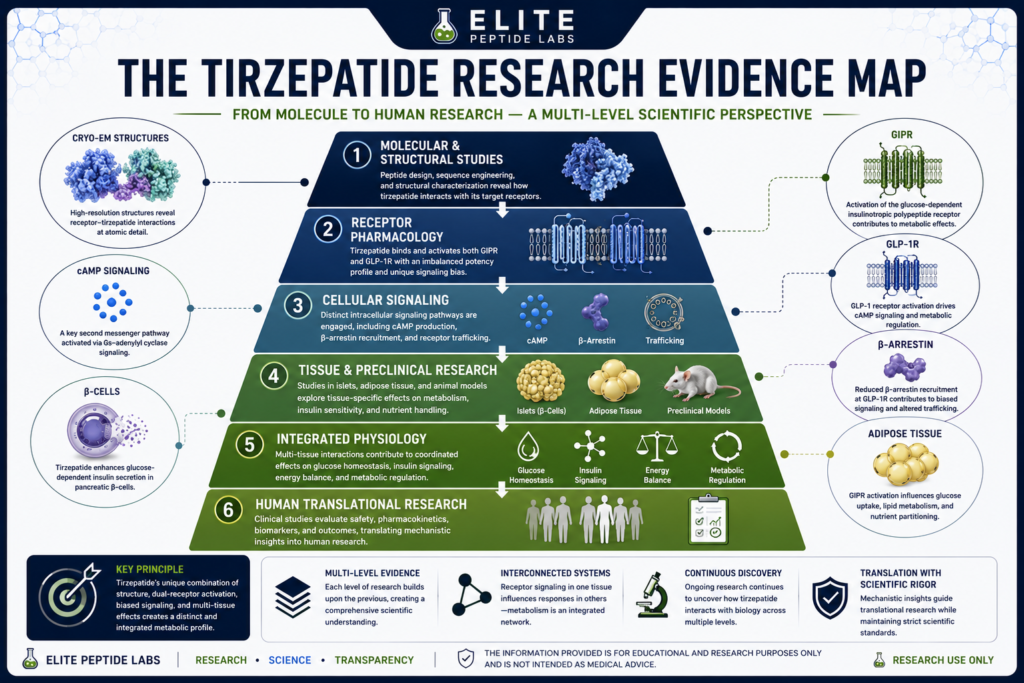
Tirzepatide in Laboratory Research — Key Areas of Investigation
The scientific interest surrounding tirzepatide extends beyond any single receptor, tissue, or metabolic pathway.
Because the molecule combines GIPR and GLP-1R agonism within a single engineered peptide, it provides researchers with a model for investigating how multiple incretin pathways interact across different levels of biological organization.
These investigations range from isolated receptor assays and cultured cells to tissue models and integrated metabolic systems.
8.1 Incretin Receptor Biology
One of the most direct applications of tirzepatide research involves studying the biology of the two receptors it was designed to activate:
- Glucose-dependent insulinotropic polypeptide receptor (GIPR)
- Glucagon-like peptide-1 receptor (GLP-1R)
Both belong to the class B family of G-protein-coupled receptors, but their tissue distribution, endogenous ligands, signaling characteristics, and physiological roles are not identical.
Tirzepatide therefore provides an interesting experimental model for examining what happens when these two incretin receptor systems are activated simultaneously.
Researchers can investigate receptor binding and activation alongside downstream events such as cAMP production, β-arrestin recruitment, receptor internalization, and receptor trafficking.
This allows experiments to move beyond the simple question of whether receptor activation occurs and instead examine the quality, magnitude, and duration of the resulting signal.
8.2 Dual-Receptor Pharmacology
Tirzepatide is particularly valuable for research into multi-receptor peptide design.
Traditional receptor pharmacology often evaluates compounds against a single molecular target. Dual agonists introduce another layer of complexity because researchers must consider not only activity at each receptor individually, but also the relative balance between the two activities.
Important experimental variables can include:
GIPR potency
GLP-1R potency
Signaling bias
Receptor trafficking
Duration of receptor activation
Together, these characteristics contribute to the compound’s overall pharmacological profile.
Studying these relationships may also help researchers understand broader principles involved in the development of dual agonists, co-agonists, and other engineered polyagonist peptides.
8.3 Pancreatic Islet and β-Cell Research
Pancreatic islets represent another major area of incretin research.
GIP and GLP-1 signaling have both been extensively investigated in relation to pancreatic β-cell function and glucose-dependent insulin secretion.
Laboratory models can be used to examine how tirzepatide influences intracellular signaling within β-cells and how simultaneous GIPR/GLP-1R activation differs from selective stimulation of either pathway.
Research questions may include changes in:
- intracellular cAMP signaling;
- glucose-responsive cellular activity;
- insulin secretory pathways;
- receptor sensitivity and desensitization;
- β-cell signaling dynamics; and
- interactions between GIPR and GLP-1R pathways.
These experiments contribute to a broader understanding of how incretin signals participate in the coordination of nutrient-responsive endocrine activity.
8.4 Glucose Homeostasis
Another major research area involves glucose homeostasis.
Glucose regulation is not controlled by a single receptor or tissue. Instead, it emerges from coordinated interactions involving pancreatic signaling, insulin activity, nutrient availability, cellular glucose handling, and multiple endocrine pathways.
Tirzepatide therefore allows researchers to investigate glucose regulation at several biological levels.
At the receptor level, experiments can examine GIPR and GLP-1R activation.
At the cellular level, researchers can study downstream signaling.
At the tissue level, investigators can examine responses within pancreatic islets, adipose tissue, and other metabolic systems.
The resulting models provide a useful framework for investigating how multi-receptor signaling can influence an integrated physiological process.
8.5 Insulin Signaling and Cellular Glucose Handling
Tirzepatide research also intersects with the study of insulin signaling and insulin sensitivity.
These investigations extend beyond insulin secretion itself.
Researchers may examine how changes in incretin signaling influence downstream processes involved in glucose uptake, cellular nutrient handling, insulin responsiveness, and communication between metabolically active tissues.
This distinction is important.
Insulin secretion describes the release of insulin.
Insulin sensitivity describes how responsive cells and tissues are to insulin signaling.
Understanding the relationship between these processes requires experimental models that examine multiple components of metabolic physiology simultaneously.
8.6 Adipose Tissue Biology
Adipose tissue has become an especially interesting area of GIP-related research.
Rather than functioning simply as passive energy storage, adipose tissue is now understood as a metabolically and endocrinologically active tissue involved in lipid storage, nutrient partitioning, endocrine signaling, and systemic metabolic regulation.
GIPR activity within adipose systems has therefore generated considerable research interest.
Experimental models may investigate relationships involving:
- glucose uptake;
- lipid metabolism;
- insulin responsiveness;
- nutrient storage;
- adipocyte signaling; and
- communication between adipose tissue and other metabolic systems.
For tirzepatide researchers, this creates an opportunity to examine how the GIPR component of dual-receptor agonism contributes to metabolic responses outside pancreatic tissue.
8.7 Energy Homeostasis and Integrated Physiology
At the broadest level, tirzepatide research contributes to the study of energy homeostasis.
Energy homeostasis describes the coordinated biological systems responsible for balancing nutrient intake, energy storage, energy utilization, and metabolic demand.
These systems involve communication between numerous tissues and signaling pathways rather than a single isolated mechanism.
This creates a hierarchy that runs throughout tirzepatide research:
Molecule
↓
Receptor
↓
Intracellular signal
↓
Cell
↓
Tissue
↓
Integrated metabolic system
The same peptide can therefore be investigated at dramatically different experimental scales.
A receptor pharmacologist may be interested primarily in GIPR versus GLP-1R signaling.
A cellular researcher may focus on cAMP or β-arrestin pathways.
A metabolic researcher may instead examine glucose regulation, adipose biology, insulin signaling, or energy balance.
Each perspective examines a different level of the same biological system.
8.8 Comparative Peptide Research
Tirzepatide is also useful as a comparator within broader peptide research.
Rather than examining the molecule entirely in isolation, researchers can compare its behavior with compounds possessing different receptor profiles.
Conceptually, experiments might compare:
Native GIP
vs.
Native GLP-1
vs.
Selective GLP-1R agonism
vs.
Dual GIPR/GLP-1R agonism
Such comparisons can help investigators separate the contribution of individual receptor pathways from the effects produced when those pathways are combined.
The same principle can extend to newer generations of engineered peptides targeting two or more metabolic receptors.
Tirzepatide therefore occupies an important position within the continuing evolution of multi-receptor peptide research.
From Mechanism to Experimental Design
Taken together, these research areas demonstrate why tirzepatide has attracted interest across multiple scientific disciplines.
It can simultaneously serve as a model for studying:
Peptide engineering
GPCR pharmacology
Biased agonism
Incretin biology
Pancreatic signaling
Glucose homeostasis
Insulin signaling
Adipose biology
Energy metabolism
Multi-receptor peptide design
But meaningful research depends on more than selecting an interesting molecule.
Researchers must also know what material they are actually studying.
Peptide identity, purity, analytical methodology, batch consistency, storage conditions, and documentation can all influence the reliability and reproducibility of experimental work.
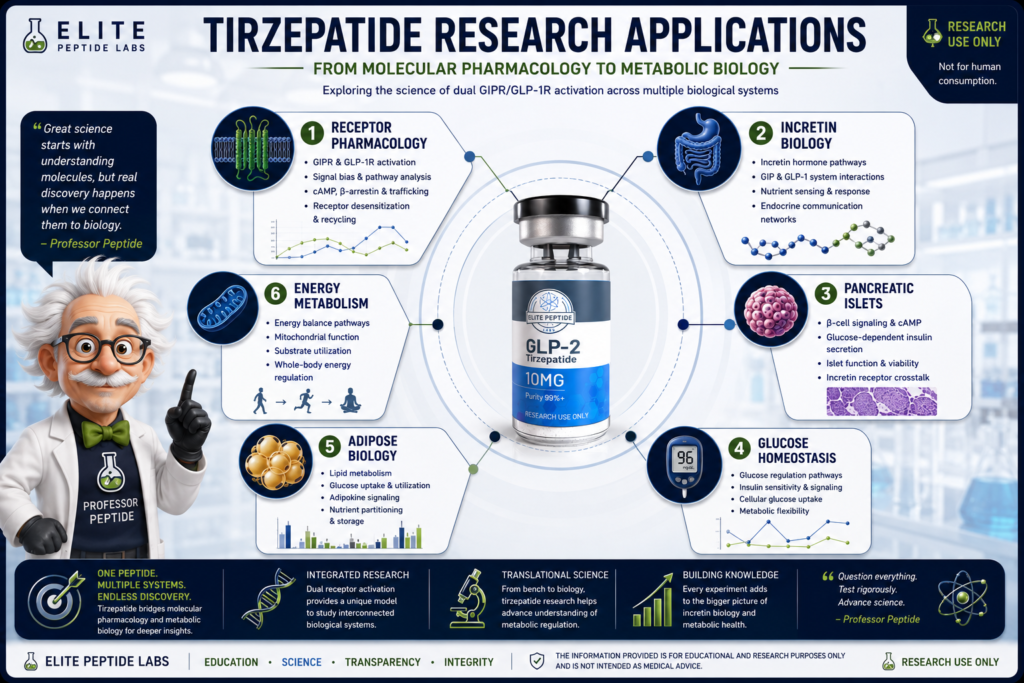
Laboratory Research Considerations & Analytical Verification
As tirzepatide research continues to expand, the quality and identity of the material being studied become important considerations when interpreting experimental results.
Because tirzepatide is a comparatively complex 39-amino-acid peptide containing several structural modifications, analytical characterization can help researchers confirm that a sample corresponds with the expected compound and evaluate characteristics such as purity.
Common analytical approaches used within peptide research may include:
- High-performance liquid chromatography (HPLC) for evaluating peptide purity and detecting related impurities.
- Mass spectrometry (MS) for confirming molecular mass and supporting compound identification.
- Batch-specific documentation for connecting analytical results with the individual material used during laboratory research.
- Controlled storage and handling to help preserve sample integrity during research.
These considerations become especially important when comparing results across experiments. Variations in sample identity, purity, storage conditions, experimental design, or analytical methodology can introduce additional variables that complicate interpretation.
Why Batch-Specific Testing Matters
A certificate of analysis is most useful when it corresponds to the specific production batch being investigated, rather than serving as a general specification for a compound.
Batch-specific analytical testing provides researchers with additional information about the material associated with a particular lot and creates a clearer connection between the peptide sample and its supporting laboratory documentation.
This principle is especially relevant to compounds such as tirzepatide, where researchers may be investigating highly specific questions involving receptor pharmacology, signaling bias, cellular responses, and metabolic biology.
Elite Peptide Labs Research Standard: Independent laboratory reports for available tested batches are published through our COA Library so researchers can review analytical documentation associated with specific products and batch numbers.
Conclusion — What Tirzepatide Has Taught Researchers About Multi-Receptor Peptide Design
Tirzepatide represents an important development in the evolution of peptide and incretin research because its scientific significance extends beyond simply activating two receptors.
Its design demonstrates how researchers can engineer a single peptide to interact with multiple biological signaling systems while controlling the relative activity produced at each receptor.
Built primarily from a GIP-derived peptide backbone, tirzepatide combines activity at both GIPR and GLP-1R with structural modifications designed to influence stability and biological persistence. Research has further demonstrated that its pharmacology involves differences in receptor potency, intracellular signaling, β-arrestin recruitment, receptor internalization, and trafficking.
Together, these characteristics have helped make tirzepatide an important research model for studying concepts such as:
- Dual-receptor agonism
- GIPR and GLP-1R pharmacology
- Biased GPCR signaling
- cAMP-mediated signaling pathways
- β-arrestin recruitment and receptor trafficking
- Pancreatic islet biology
- Glucose and insulin signaling
- Adipose and energy metabolism
- Multi-receptor peptide engineering
From Individual Receptors to Integrated Biology
One of the broader lessons emerging from tirzepatide research is that peptide pharmacology cannot always be understood simply by asking whether a compound activates a particular receptor.
Researchers must also consider how strongly that receptor is activated, which intracellular pathways are engaged, how the receptor behaves following activation, and how signaling across multiple receptors ultimately interacts at the cellular and physiological level.
This makes tirzepatide particularly interesting from a research perspective.
Rather than studying GIPR and GLP-1R as completely independent signaling systems, tirzepatide provides a model for investigating how the two pathways can be engaged by a single engineered molecule.
The Continuing Evolution of Multi-Receptor Research
The development of tirzepatide also reflects a larger shift occurring within peptide science.
Researchers are increasingly investigating compounds designed around multi-receptor pharmacology, where molecular structure, receptor selectivity, signaling bias, and pharmacokinetic engineering can potentially be combined within a single peptide.
Tirzepatide therefore represents more than one individual research compound. It provides an example of how modern peptide engineering can be used to investigate increasingly complex questions about receptor biology, intracellular signaling, metabolic regulation, and integrated physiology.
As new structural, cellular, and translational studies continue to emerge, tirzepatide will likely remain an important reference point for understanding the scientific principles behind dual- and multi-receptor peptide design.
🧪 About the Elite Peptide Labs Research Library
The Elite Peptide Labs Research Library was created with a simple goal:
To provide clear, evidence-based educational resources that help readers better understand peptide science.
Rather than focusing on sensational headlines or speculation, every Research Library edition is designed to:
📚 Explain complex scientific concepts in plain language.
🔬 Summarize current areas of laboratory research.
⚖️ Distinguish between ongoing investigation and established scientific understanding.
🧠 Encourage thoughtful evaluation of published evidence.
🌍 Promote scientific curiosity through responsible education.
As the library continues to grow, new editions will explore additional peptides, laboratory techniques, biological pathways, and emerging areas of scientific interest.
Whether you’re reading your first article or your fiftieth, our mission remains the same:
Help readers understand the science—not just the conversation surrounding it.
📖 Continue Exploring the Research Library
Science is a journey, and every article adds another piece to the puzzle.
Continue your exploration with:
📘 RL-001
How to Store Research Peptides Properly: A Complete Laboratory Guide
Learn best practices for storage conditions, temperature stability, lyophilized peptides, reconstituted solutions, and laboratory handling techniques.
📘 RL-002
Understanding BPC-157: Current Research, Scientific Interest & Frequently Asked Questions
What researchers know, what they’re studying, and what remains unanswered.
📘 RL-003
The Complete Research Guide to Retatrutide – RL-003
Understanding One of the Most Exciting Areas of Modern Metabolic Research
📘 RL-004
How to Read a Certificate of Analysis (COA) – RL-004
How to Read a Certificate of Analysis (COA)
📘 RL-005
Peptide Reconstitution for Laboratory Research
📘 RL-006
The Complete Guide to Semax for Laboratory Research – RL-006
Semax Structure, Research History, Mechanisms of Interest & Scientific Literature
📘 RL-007
The Complete Guide to GHK-Cu for Laboratory Research – RL-007
GHK-Cu Research, Structure, Discovery, Biological Significance & Scientific Literature
📘 RL-008
The Complete Guide to Tirzepatide for Laboratory Research – RL-008
(You’re here now)
📘 Coming Soon
🧬 Peptide Purity Testing / HPLC / Mass Spectrometry
🧬 Semaglutide Research Guide
🧬 Tesamorelin Research Guide
🧬 MOTS-c Research Guide
🧬 NAD⁺ Research Guide
🧬 TB-500 Research Guide
🧬 Understanding Peptides: A Beginner’s Guide
🧬 How Scientists Read Research Papers
🧬 Veterinary Peptide Research: Current Areas of Investigation
…and many more.
🧪 Professor Peptide’s Final Note
“The best researchers aren’t the ones with all the answers—they’re the ones who never stop asking thoughtful questions. Every experiment, every published paper, and every new discovery helps move science one step forward.”
📋 Research Library Standards
Every article published within the Elite Peptide Labs Research Library is developed using the same editorial principles:
✅ Evidence-based educational content
✅ Plain-language scientific explanations
✅ Balanced discussion of current laboratory research
✅ Clear distinction between investigation and established conclusions
✅ Commitment to scientific integrity and continuous learning
These principles help ensure consistency across the entire Research Library and reflect our commitment to responsible scientific communication.
⚠️ Research Use Notice
The information presented throughout this guide is provided solely for educational and informational purposes.
Products referenced on the Elite Peptide Labs website are intended exclusively for laboratory research, analytical testing, and scientific investigation.
They are not intended for human or veterinary use, nor are they intended to diagnose, treat, cure, or prevent any disease.
Readers are encouraged to evaluate published scientific literature carefully and consult original research whenever possible
References & Further Reading
Readers interested in exploring the scientific literature can begin with these reputable resources:
- Willard FS, Douros JD, Gabe MBN, et al. Tirzepatide is an imbalanced and biased dual GIP and GLP-1 receptor agonist.
- Sun B, Willard FS, Feng D, et al. Structural determinants of dual incretin receptor agonism by tirzepatide.
- Structural insights into multiplexed pharmacological actions of tirzepatide and peptide 20 at the GIP, GLP-1 or glucagon receptors.
Nature Communications. 2022;13:1057. - Samms RJ, Christe ME, Collins KA, et al. GIPR agonism mediates weight-independent insulin sensitization by tirzepatide in obese mice. Journal of Clinical Investigation. 2021;131(12):e146353.
- Roell WC, et al. Tirzepatide modulates the regulation of adipocyte nutrient metabolism through long-acting activation of the GIP receptor. Cell Metabolism. 2024.
Scientific understanding continues to evolve. Readers are encouraged to consult original peer-reviewed publications when evaluating ongoing areas of peptide research.